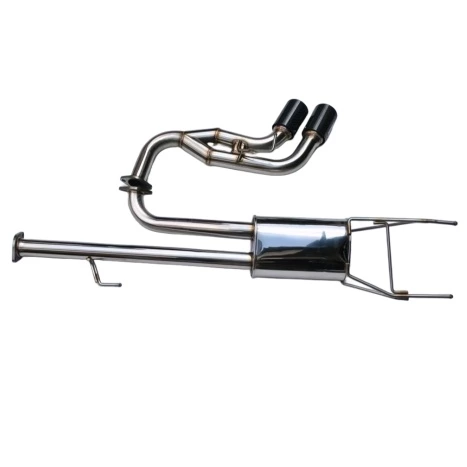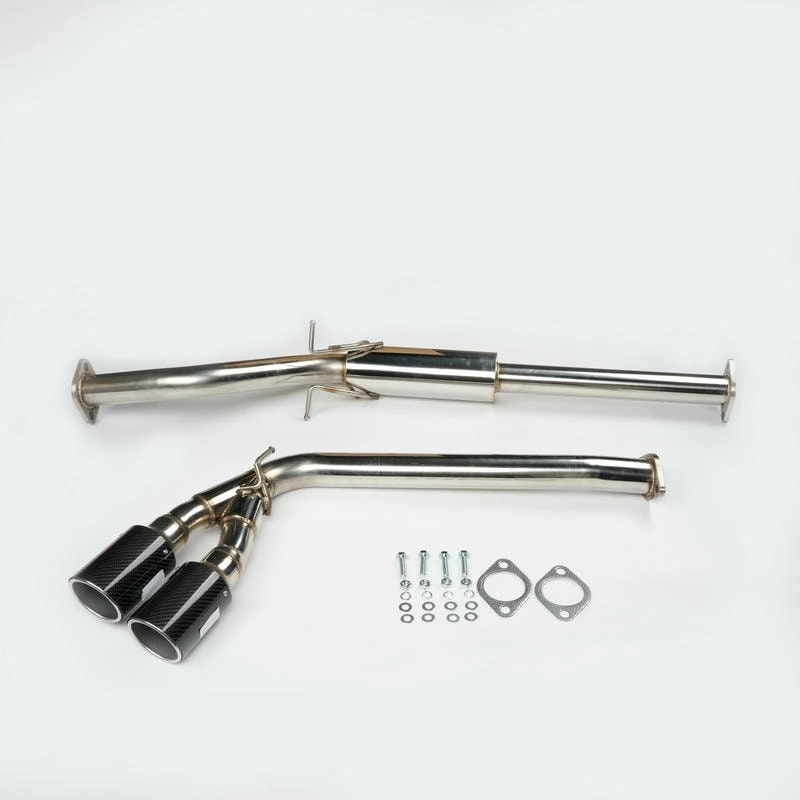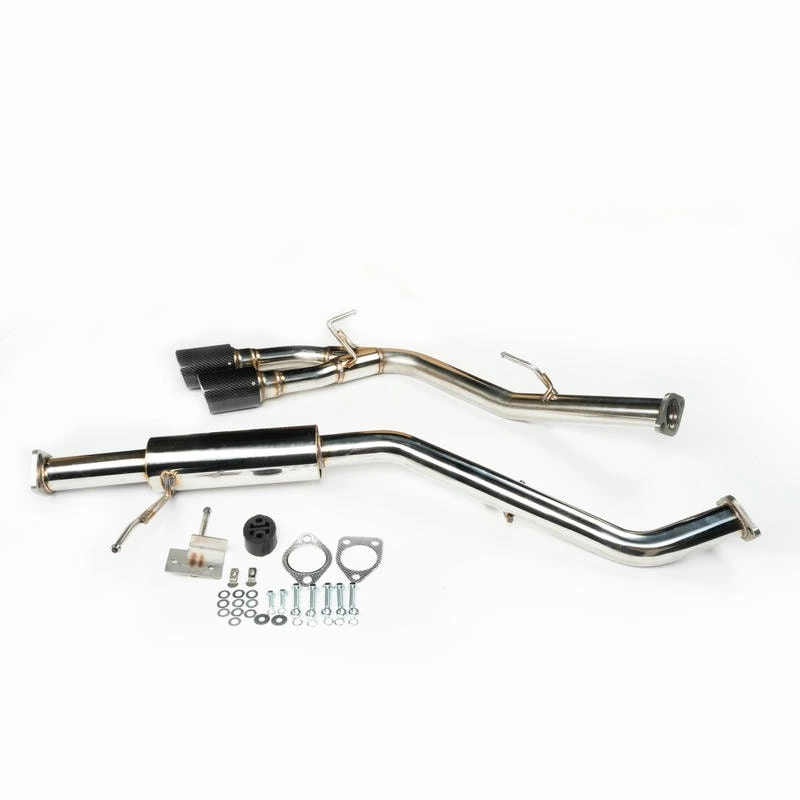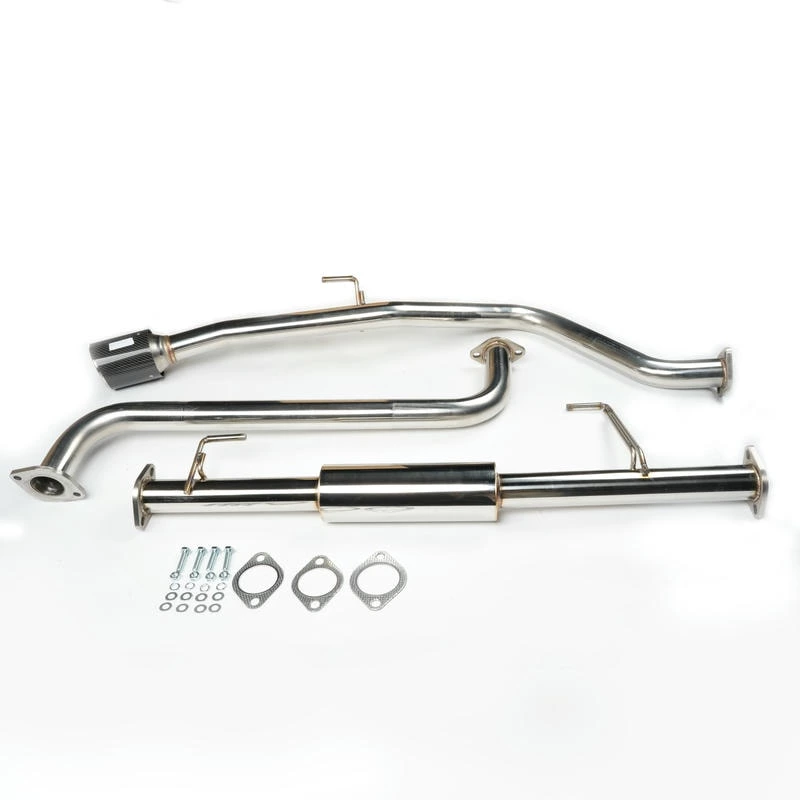
Exhaust Pipe Diameter Guide: How Size Affects Performance and Sound
Exhaust pipe diameter is an important factor in automotive exhaust system design. The size of the pipe affects how efficiently exhaust gases move through the system, influencing airflow performance, sound characteristics, and overall vehicle operation.
Choosing the correct exhaust pipe diameter is not simply about selecting a larger pipe. An oversized pipe may reduce exhaust gas velocity, while an undersized pipe can create unnecessary flow restrictions. The ideal diameter depends on factors such as engine output, vehicle application, exhaust system configuration, and installation requirements.
For OEM and custom exhaust applications, proper exhaust pipe sizing helps achieve a balance between performance, reliability, and long-term durability. Custom exhaust pipe solutions can be developed based on vehicle requirements, installation conditions, and specific application needs.
Understanding Exhaust Pipe Diameter and Exhaust Flow
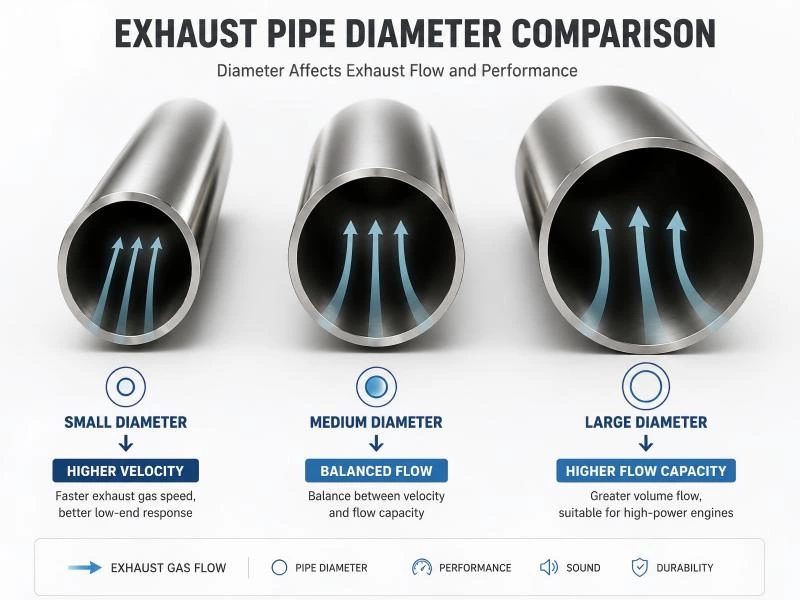
The primary function of an exhaust pipe is to transfer exhaust gases away from the engine while maintaining efficient flow through the exhaust system. Pipe diameter directly influences the relationship between exhaust gas velocity and flow capacity.
A smaller diameter exhaust pipe allows exhaust gases to maintain higher velocity, which can support better response at lower engine speeds. However, a pipe that is too small may restrict exhaust flow when the engine produces higher volumes of exhaust gases.
A larger diameter exhaust pipe provides greater flow capacity and can support higher-output engines. However, excessive diameter may reduce exhaust gas velocity and affect overall system balance.
For this reason, exhaust pipe selection requires consideration of both airflow requirements and vehicle operating conditions.
Key Factors Affecting Exhaust Pipe Selection
- Engine displacement and power output
- Vehicle application and driving conditions
- Complete exhaust system configuration
- Installation space and vehicle structure
How Exhaust Pipe Diameter Affects Performance
Smaller Exhaust Pipe Diameter
Smaller diameter pipes are commonly used in applications where maintaining exhaust gas velocity is important. Higher gas velocity can help improve throttle response and provide smoother performance during low and medium engine speeds.
However, if the pipe diameter is too small for the engine output, exhaust gases may encounter increased resistance. This can limit airflow efficiency, especially during high-load operation.
Larger Exhaust Pipe Diameter
Larger exhaust pipes provide additional space for exhaust gases to flow, making them suitable for engines that generate higher exhaust volumes.
They are often considered for:
- High-performance vehicles
- Modified engine applications
- Heavy-load vehicle systems
However, a larger exhaust pipe is not always the best solution. The exhaust system needs to maintain an appropriate balance between flow capacity and exhaust gas velocity to achieve stable performance.
Exhaust Pipe Size Chart: Diameter Selection by Engine Power
Selecting the correct exhaust pipe diameter requires more than simply choosing the largest available size. Engine power, exhaust gas volume, vehicle purpose, and the overall exhaust system design all influence the appropriate pipe size.
The following chart provides a general reference for understanding how exhaust pipe diameter requirements may vary based on engine output and application. Actual specifications should always be determined according to vehicle design and performance requirements.
| Application | Exhaust Pipe Diameter Consideration | Typical Requirements |
|---|---|---|
| Daily Passenger Vehicles | Smaller to medium diameter pipes | Balanced airflow, smooth driving performance, and noise control |
| Performance Vehicles | Medium to larger diameter pipes | Increased exhaust flow capacity for higher engine output |
| High-Power Applications | Larger diameter exhaust systems | Support higher exhaust volume under heavy load conditions |
| Commercial Vehicle Applications | Application-specific sizing | Focus on durability, operating conditions, and long-term reliability |
For automotive applications, exhaust pipe diameter should be matched with the engine characteristics rather than selected only based on horsepower. A properly sized exhaust pipe helps maintain efficient exhaust flow while avoiding unnecessary restriction or reduced gas velocity.
How to Choose the Right Exhaust Pipe Diameter
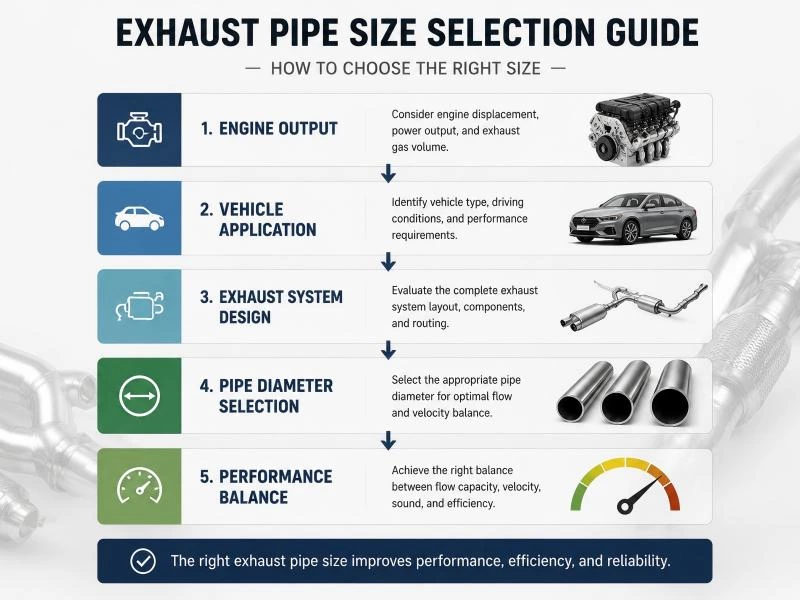
Choosing an exhaust pipe size requires evaluating several factors together. The correct diameter depends on the relationship between engine requirements, vehicle usage, and the complete exhaust system layout.
1. Consider Engine Displacement and Power Output
Engine displacement and power output are two of the most important factors when selecting exhaust pipe diameter. Engines producing higher exhaust volumes generally require greater flow capacity, while smaller engines may benefit from maintaining higher exhaust velocity.
A suitable exhaust pipe size allows the engine to remove exhaust gases efficiently without creating excessive restriction or reducing system response.
2. Match the Pipe Size with Vehicle Application
Different vehicles have different exhaust requirements. A passenger vehicle designed for daily driving may prioritize smooth operation and noise control, while performance-oriented applications may require increased exhaust flow capacity.
- Passenger Vehicles: Focus on balanced performance, comfort, and emission requirements.
- Performance Vehicles: Require consideration of higher airflow demand and operating conditions.
- Commercial Vehicles: Need durable exhaust solutions for continuous operation and demanding environments.
3. Consider the Complete Exhaust System Design
Exhaust pipe diameter should not be evaluated separately from other exhaust components. The muffler, catalytic converter, exhaust manifold, and pipe routing all affect overall system performance.
A well-designed exhaust system requires proper coordination between each component to achieve reliable airflow, suitable sound levels, and long-term durability.
Effects of Choosing the Wrong Exhaust Pipe Size
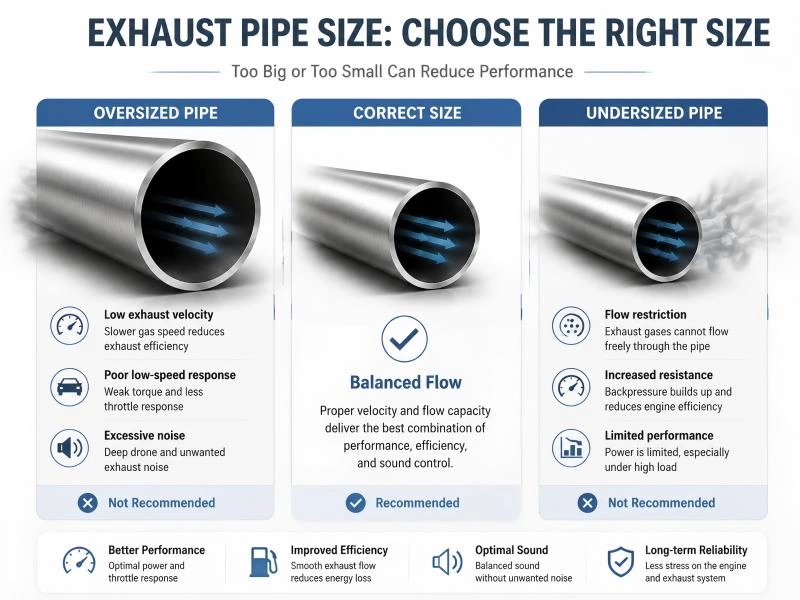
Selecting an incorrect exhaust pipe diameter can affect the overall performance and reliability of an exhaust system. While pipe size is only one part of the complete design, an unsuitable diameter may create problems with exhaust flow, vehicle response, and long-term operation.
Problems Caused by an Oversized Exhaust Pipe
A larger exhaust pipe can provide increased flow capacity, but an excessive diameter may reduce exhaust gas velocity. This can affect how efficiently exhaust gases move through the system, especially during low and medium engine speeds.
Common issues associated with oversized exhaust pipes include:
- Reduced exhaust gas velocity at lower engine speeds
- Less responsive throttle performance in certain applications
- Increased exhaust noise without additional performance benefits
- More complex installation requirements due to larger pipe dimensions
Problems Caused by an Undersized Exhaust Pipe
An exhaust pipe that is too small may restrict exhaust flow, particularly when the engine operates under high load conditions. Limited flow capacity can increase exhaust resistance and reduce overall system efficiency.
Potential issues include:
- Increased exhaust restriction
- Reduced performance at higher engine speeds
- Higher exhaust system stress during continuous operation
- Reduced suitability for high-output engine applications
Finding the Right Balance Between Flow and Velocity
The ideal exhaust pipe diameter provides a balance between exhaust gas velocity and flow capacity. A properly sized pipe allows efficient exhaust movement while maintaining the characteristics required for the specific vehicle application.
For OEM and custom exhaust projects, engineers typically evaluate engine specifications, vehicle structure, operating conditions, and complete exhaust system requirements before determining the appropriate pipe dimensions.
Exhaust Pipe Diameter Considerations for OEM Applications
OEM exhaust pipe design involves more than selecting a suitable diameter. Vehicle manufacturers and automotive suppliers must consider installation space, exhaust routing, production consistency, and long-term operating conditions.
Different vehicle platforms may require different exhaust pipe designs due to variations in engine configuration, chassis structure, and mounting positions. A properly developed exhaust pipe solution helps ensure reliable installation and consistent performance across different vehicle models.
Key Considerations for OEM Exhaust Pipe Design
- Vehicle model and engine specifications
- Available installation space and pipe routing requirements
- Material selection and operating temperature conditions
- Production consistency for volume supply
AOSU supports custom exhaust pipe solutions based on vehicle requirements, drawings, and application needs. From design adjustment to production processes, customized exhaust components can be developed for different automotive applications.
Stainless Steel Exhaust Pipes and Diameter Design
Material selection is another important factor when developing exhaust pipe solutions. While pipe diameter determines exhaust flow characteristics, the material affects durability, corrosion resistance, and long-term performance under different operating conditions.
Stainless steel exhaust pipes are widely used in automotive applications because they can withstand high temperatures, moisture exposure, and demanding driving environments. Combined with proper diameter selection, stainless steel construction helps create exhaust systems with stable performance and extended service life.
Why Stainless Steel Is Used for Exhaust Pipes
Stainless steel offers several advantages for exhaust pipe applications:
- Corrosion Resistance: Helps protect exhaust pipes from moisture, road salt, and environmental exposure.
- Heat Resistance: Maintains structural stability under high exhaust temperatures.
- Long-Term Reliability: Supports consistent performance during extended vehicle operation.
For different vehicle applications, exhaust pipe design requires a balance between material characteristics, pipe dimensions, and system requirements. A suitable combination helps ensure reliable exhaust flow while meeting installation and durability expectations.
Custom Exhaust Pipe Solutions for Different Applications
Different vehicles and operating conditions require different exhaust pipe designs. A standard pipe size may not always meet the requirements of specific vehicle platforms, engine configurations, or installation layouts.
Custom exhaust pipe solutions allow adjustments based on factors such as:
- Vehicle model and exhaust system structure
- Required pipe diameter and routing design
- Material specifications and performance targets
- OEM replacement or aftermarket requirements
For automotive suppliers and project developers, customized exhaust pipe solutions provide greater flexibility in achieving proper fitment, reliable performance, and consistent production quality.
When developing a complete exhaust system, components such as pipes and mufflers need to work together to achieve proper airflow, noise control, and durability. Rear muffler solutions can be integrated with different exhaust pipe designs to meet specific vehicle requirements.
Frequently Asked Questions About Exhaust Pipe Diameter
What size exhaust pipe do I need?
The correct exhaust pipe size depends on engine displacement, power output, vehicle application, and the complete exhaust system design. There is no universal pipe diameter suitable for every vehicle.
Does a larger exhaust pipe improve performance?
A larger exhaust pipe can increase exhaust flow capacity, but an oversized pipe may reduce exhaust gas velocity and affect overall system balance. The correct diameter depends on the specific engine and application requirements.
Is bigger exhaust pipe diameter always better?
No. The best exhaust pipe diameter is the one that provides an appropriate balance between airflow, velocity, sound characteristics, and vehicle operating conditions.
Can exhaust pipe diameter be customized?
Yes. Custom exhaust pipe solutions can be developed according to vehicle specifications, drawings, samples, and application requirements. This allows manufacturers and suppliers to support different automotive exhaust system designs.