How Much Does It Cost to Replace an Exhaust Pipe?
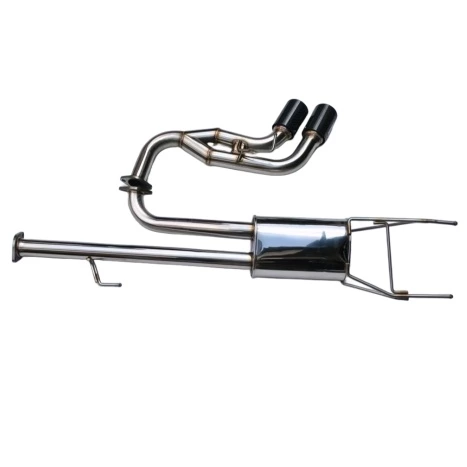
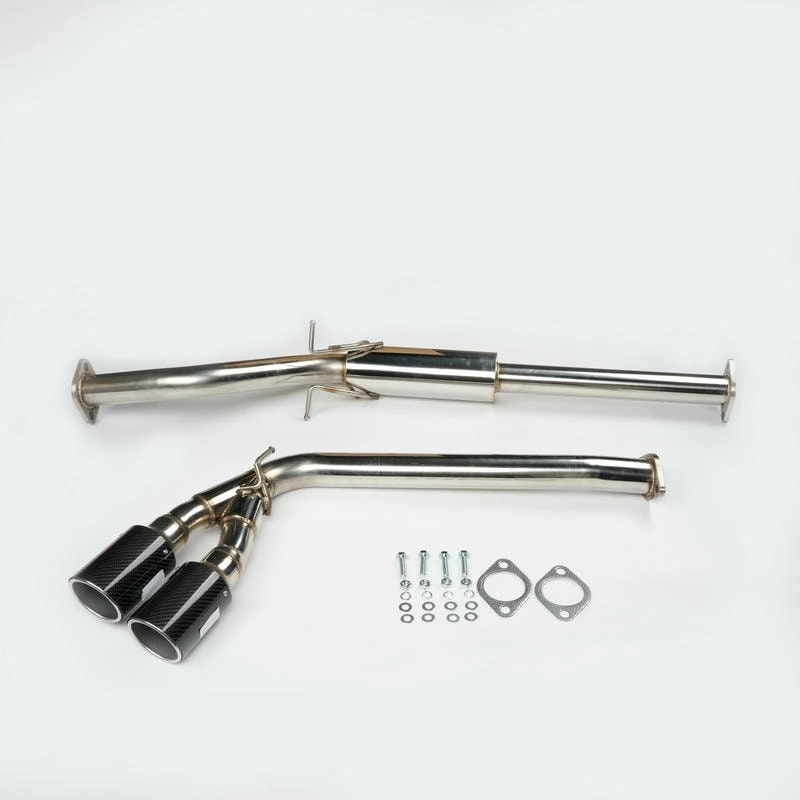
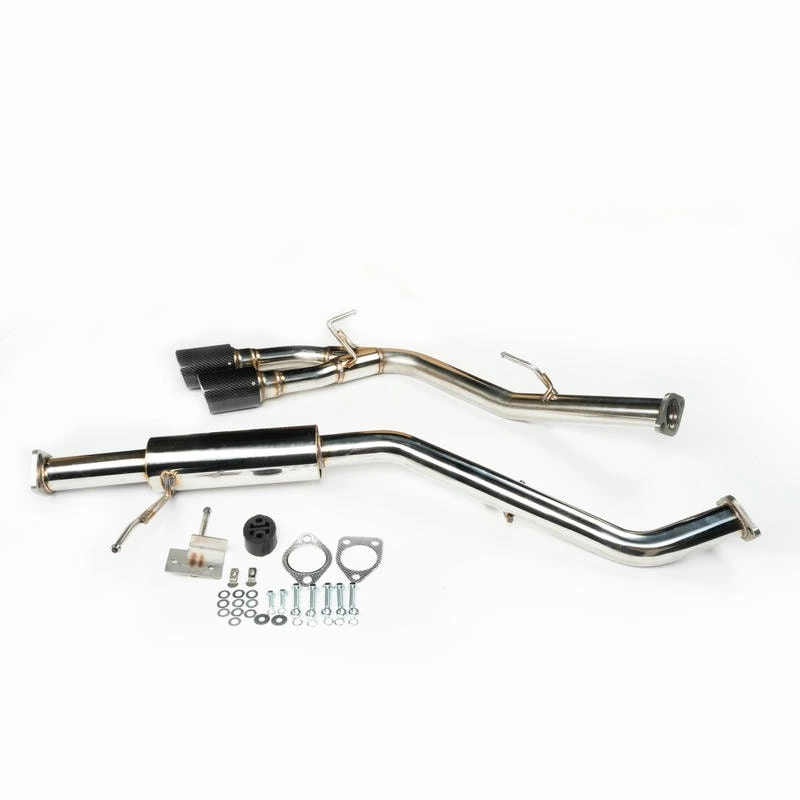
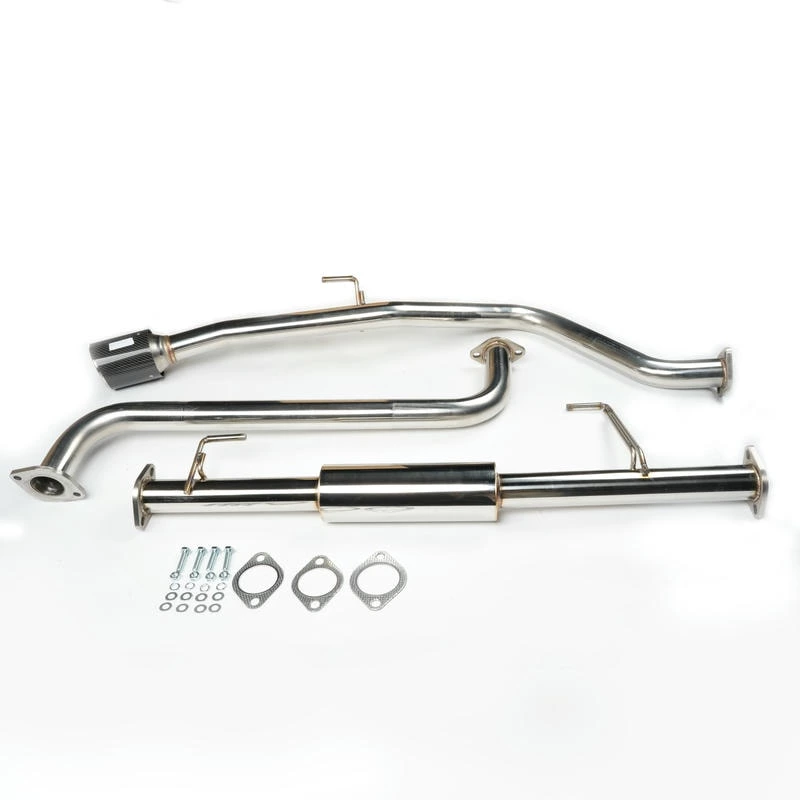
The cost of replacing an exhaust pipe can vary widely depending on the vehicle, the type of pipe, material, fitment requirements, and whether professional installation is included. A simple universal pipe section may be relatively inexpensive, while a vehicle-specific stainless steel exhaust pipe or complete replacement assembly can cost considerably more.
This is why there is no single answer to how much it costs to replace an exhaust pipe. The final amount may include not only the exhaust pipe itself but also labor, clamps, gaskets, hangers, welding, and other installation-related parts.
For vehicle owners, it is important to distinguish between the price of an exhaust pipe and the total exhaust pipe replacement cost. For OEM buyers and automotive projects, pricing works differently again because custom exhaust pipes are usually quoted according to technical specifications, materials, manufacturing complexity, and order quantity.
AOSU provides OEM and custom exhaust pipe solutions for different automotive applications, with production based on vehicle specifications, drawings, samples, materials, dimensions, and project requirements.
How Much Does It Cost to Replace an Exhaust Pipe?
Exhaust pipe replacement costs can range from relatively low-cost repairs involving a short pipe section to much more expensive jobs requiring a vehicle-specific assembly and professional installation. The price depends heavily on exactly which section of the exhaust system needs to be replaced.
When comparing exhaust pipe prices, first determine whether the quotation includes:
- The exhaust pipe only
- A vehicle-specific replacement pipe or assembly
- Stainless steel or another material
- Flanges, clamps, hangers, and connection hardware
- Cutting, welding, or other fabrication work
- Professional installation labor
This distinction explains why online searches for how much are exhaust pipes can produce very different prices. A universal straight pipe and a direct-fit replacement exhaust pipe with multiple bends, welded flanges, mounting brackets, and vehicle-specific dimensions are not comparable products.
Exhaust Pipe Price vs Replacement Cost
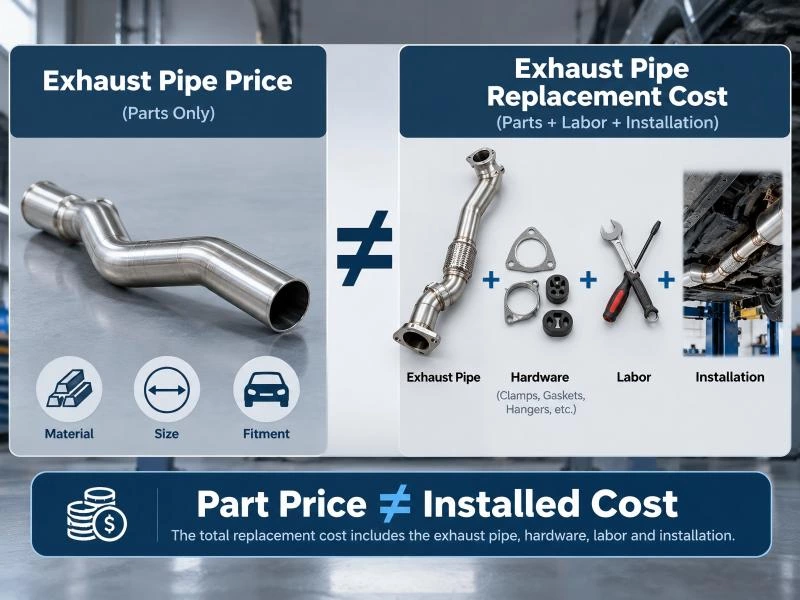
| Cost Type | What It Usually Includes | Typical Pricing Approach |
|---|---|---|
| Exhaust Pipe Price | The pipe or replacement component only | Based on product type, material, dimensions, and fitment |
| Replacement Cost | Pipe, hardware, labor, and installation | Depends on vehicle and repair complexity |
| OEM Exhaust Pipe | Vehicle-specific component made to defined specifications | Depends on application and sourcing requirements |
| Custom Exhaust Pipe | Pipe developed from drawings, samples, or project specifications | Usually quotation-based |
For example, replacing only a damaged section of tubing may cost much less than replacing a larger assembly that includes complex bends, connections, and mounting points. Corroded bolts, difficult access, welding requirements, and surrounding component damage can also increase the final installation cost.
Key point: The cheapest exhaust pipe is not necessarily the lowest-cost replacement. Correct fitment, suitable material, and reliable manufacturing can reduce installation problems and help avoid premature replacement.
What Affects Exhaust Pipe Replacement Cost?
The price of an exhaust pipe replacement depends on more than the damaged section itself. Two pipes that appear similar can have very different costs because of differences in vehicle fitment, material, diameter, bending complexity, connection design, and installation requirements.
For this reason, understanding the main cost factors is more useful than relying on a single average exhaust pipe price.
1. Vehicle Make, Model and Exhaust Layout
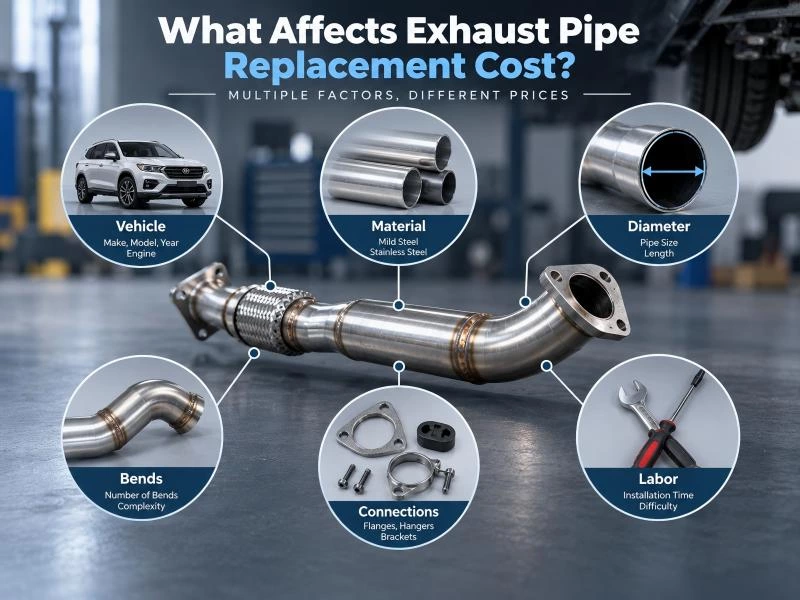
Vehicle compatibility is one of the biggest factors affecting replacement cost. Different vehicles use different pipe lengths, routing, bends, mounting positions, and connection designs.
A simple pipe used on one vehicle may require only a few bends, while another application may need a longer and more complex component to pass around the chassis, suspension, fuel tank, or other underbody structures.
Vehicle-related factors that can affect price include:
- Vehicle make and model
- Production year
- Engine configuration
- Exhaust system layout
- Available installation space
- Number and position of connection points
2. Exhaust Pipe Material
Material has a direct influence on exhaust pipe price. Mild steel generally has a lower initial material cost, while stainless steel usually costs more because of its improved corrosion resistance, heat durability, and service life.
| Material | Cost Level | Main Consideration |
|---|---|---|
| Mild Steel | Lower | Lower initial cost but generally less corrosion resistant |
| 409 Stainless Steel | Medium | Common balance of durability, heat resistance, and cost for automotive applications |
| 304 Stainless Steel | Higher | Higher corrosion resistance and suitable for applications where long-term durability is important |
A higher material price does not automatically mean the pipe is the better choice for every vehicle. Material should be selected according to the operating environment, expected service life, OEM specification, and project budget.
3. Pipe Diameter and Overall Size
Larger or longer exhaust pipes generally require more raw material, which can increase component cost. Pipe diameter can also affect manufacturing requirements, especially when the design includes multiple bends or special connection points.
However, diameter should not be selected based on price alone. A replacement pipe needs to match the vehicle and engine requirements to maintain suitable exhaust flow and compatibility with the existing system.
For more information about selecting the correct size, see our exhaust pipe diameter guide.
4. Number and Complexity of Bends
A straight exhaust tube is generally simpler to manufacture than a vehicle-specific pipe with several bends. Complex routing requires greater control over bend angles, bend radius, dimensional accuracy, and repeatability.
For example, an exhaust pipe that needs to pass around multiple underbody components may require several precisely positioned bends. The more complex the geometry, the more manufacturing work is required to maintain the intended dimensions and fitment.
Straight Tube → Lower Manufacturing Complexity
Multiple Vehicle-Specific Bends → Higher Manufacturing Complexity
5. Flanges, Hangers and Connection Components
Exhaust pipes are rarely defined by tubing alone. Vehicle-specific parts may also require welded flanges, hangers, brackets, joints, or other connection features.
These additional components influence both material and manufacturing cost because they need to be positioned accurately to match surrounding exhaust parts and vehicle mounting points.
- Flange type and thickness
- Hanger quantity and position
- Slip joints or clamp connections
- Welded brackets
- Sensor or accessory mounting requirements, where applicable
6. Welding and Manufacturing Requirements
The number of welded joints and the required manufacturing accuracy can also affect exhaust pipe cost. More complicated assemblies may require additional welding, dimensional checks, and quality inspection compared with a simple pipe section.
For OEM production, consistency becomes especially important. Bend positions, flange orientation, pipe length, and mounting locations need to remain stable across the production batch.
7. OEM, Aftermarket or Custom Production
The source and specification of the replacement pipe can create a significant price difference.
| Type | Pricing Characteristics | Typical Application |
|---|---|---|
| Universal Pipe | Generally lower cost but may require modification | Basic repair or fabrication |
| Aftermarket Direct-Fit | Vehicle-specific with moderate pricing | Replacement applications |
| OEM Exhaust Pipe | Often higher due to original specifications and sourcing | Factory-specification replacement |
| Custom Exhaust Pipe | Quoted according to specifications and quantity | OEM, modified, or special vehicle applications |
8. Order Quantity for OEM and Custom Projects
For individual vehicle repairs, customers usually purchase one replacement component. OEM and custom exhaust pipe projects work differently because production quantity can influence tooling, setup, material purchasing, and unit cost.
A prototype or small production batch generally carries more development and setup cost per unit than a larger order. For volume production, manufacturing costs can be distributed across a greater quantity of parts.
For custom exhaust pipe quotations, the most useful information includes:
- Vehicle make, model, year, and engine
- Material specification
- Pipe diameter and dimensions
- Drawing or physical sample
- Bending and connection requirements
- Required order quantity
AOSU develops OEM and custom exhaust pipes according to vehicle specifications, drawings, samples, materials, dimensions, and production requirements.
OEM vs Aftermarket Exhaust Pipe Cost
The cost of an exhaust pipe can also vary depending on whether the part is OEM, aftermarket, universal, or custom-made. Each option serves a different purpose, so price should be compared together with fitment, material, and application requirements.
For a standard vehicle repair, an aftermarket direct-fit pipe may offer a practical balance between cost and compatibility. OEM parts are usually designed to match original factory specifications, while custom exhaust pipes are developed for specific project requirements rather than sold at a fixed retail price.
| Exhaust Pipe Type | Typical Cost Level | Main Advantage | Best For |
|---|---|---|---|
| Universal Pipe | Lower | Simple and widely available | Basic repairs or fabrication |
| Aftermarket Direct-Fit | Medium | Vehicle-specific replacement | Common replacement needs |
| OEM Exhaust Pipe | Higher | Matches original specifications | Factory-style replacement |
| Custom Exhaust Pipe | Quote-Based | Designed for project-specific requirements | OEM, modified, or special applications |
Price should not be compared by part category alone. A lower-cost pipe may require additional modification or installation work, while a properly matched direct-fit or custom component may reduce fitment problems later.
Exhaust Pipe Parts Cost vs Labor Cost
One of the biggest reasons exhaust pipe replacement estimates vary is that the price of the pipe itself is only one part of the total repair cost. Labor and installation requirements can add significantly to the final amount.
A simple bolt-on replacement may require relatively little labor, while a heavily corroded exhaust system can take much longer if bolts, clamps, joints, or surrounding components are difficult to remove.
What Is Usually Included in Parts Cost?
The parts portion of an exhaust pipe replacement may include more than the pipe itself, depending on the vehicle and the condition of the existing system.
- Replacement exhaust pipe or pipe assembly
- Clamps or connection hardware
- Gaskets
- Hangers or mounting components
- Flanges or joints
- Other damaged exhaust components, if required
What Can Increase Labor Cost?
Installation labor depends heavily on accessibility and the condition of the old exhaust components. Rust and corrosion can make removal more difficult, while some replacement jobs may require cutting or welding instead of simple bolt-on installation.
Common factors that can increase labor time include:
- Severely rusted bolts or clamps
- Difficult access underneath the vehicle
- Cutting away damaged pipe sections
- Welding or fabrication requirements
- Misaligned or damaged mounting points
- Replacement of surrounding exhaust hardware
Why Part Price and Installed Price Can Be Very Different
A low-priced exhaust pipe does not necessarily result in a low total replacement bill. If the part requires cutting, welding, modification, or additional hardware to fit the vehicle, the installation cost can offset the lower purchase price.
Conversely, a properly matched replacement pipe may have a higher initial component price but require less modification during installation.
| Scenario | Part Cost | Labor Complexity | Total Cost Impact |
|---|---|---|---|
| Simple Direct-Fit Replacement | Medium | Lower | More predictable |
| Universal Pipe Requiring Modification | Lower | Medium to Higher | Can increase during installation |
| Severely Corroded Exhaust System | Varies | Higher | Additional labor and hardware may be required |
| Custom Exhaust Pipe Project | Quote-Based | Depends on project | Based on specifications and production requirements |
Is a Stainless Steel Exhaust Pipe Worth the Higher Cost?
Stainless steel exhaust pipes generally have a higher initial material cost than mild steel, but the higher price can provide additional value in applications where corrosion resistance and long-term durability are important.
Exhaust pipes are constantly exposed to moisture, road salt, heat cycles, and environmental contaminants. These conditions can accelerate corrosion, especially when vehicles operate in coastal regions, wet climates, or areas where winter road salt is commonly used.
Stainless steel helps reduce corrosion-related deterioration and can provide longer service life when the material grade and exhaust design are appropriate for the application.
Stainless steel may be worth the higher initial cost when:
- The vehicle operates in a humid or salt-exposed environment
- Long-term corrosion resistance is a priority
- The exhaust pipe is expected to remain in service for an extended period
- The project requires durable OEM or vehicle-specific components
For more detail about 304, 409, corrosion resistance, and material selection, see our guide to stainless steel exhaust pipes.
The most economical option should therefore be evaluated over the expected service life of the component rather than by initial material cost alone.
Why Custom Exhaust Pipe Prices Vary
Custom exhaust pipe pricing is different from buying a standard replacement part because the component is developed around specific vehicle and production requirements. There is usually no single fixed price that applies to every project.
The final quotation depends on the amount of engineering, material, fabrication, and production work required. A simple pipe made from an existing drawing will normally involve less development than a new vehicle-specific part that must be reproduced from a physical sample.
| Cost Factor | How It Affects Custom Exhaust Pipe Pricing |
|---|---|
| Material Grade | 304 stainless steel, 409 stainless steel, and other materials have different raw material costs. |
| Pipe Diameter & Length | Larger diameters and longer pipe sections require more material. |
| Bending Complexity | Multiple bends, tight routing, and precise bend positions increase manufacturing requirements. |
| Welded Components | Flanges, hangers, brackets, and additional joints require more fabrication and inspection. |
| Prototype Development | New parts may require drawing review, sample reproduction, trial production, and fitment verification. |
| Production Quantity | Setup and development costs are distributed differently between prototypes, small batches, and volume orders. |
Drawings vs Physical Samples
A complete technical drawing can make quotation and development more straightforward because dimensions, bend positions, connection points, and tolerances are already defined.
When only a physical sample is available, additional measurement and reverse-engineering work may be required before production can begin. This can influence prototype cost and development time.
For custom projects, pricing becomes more accurate when the manufacturer receives:
- Complete 2D or 3D drawings
- A physical exhaust pipe sample
- Vehicle and engine information
- Material requirements
- Expected order quantity
Prototype Cost vs Volume Production Cost
Prototype pricing should not be compared directly with the unit price of a production order. A prototype may include engineering review, fixture setup, bending trials, welding adjustments, and dimensional verification that are completed before stable production begins.
Once the design and production process are confirmed, larger quantities can usually distribute setup costs across more parts. This is why OEM exhaust pipe quotations normally require an expected annual or batch quantity.
How to Get an Accurate Exhaust Pipe Quote
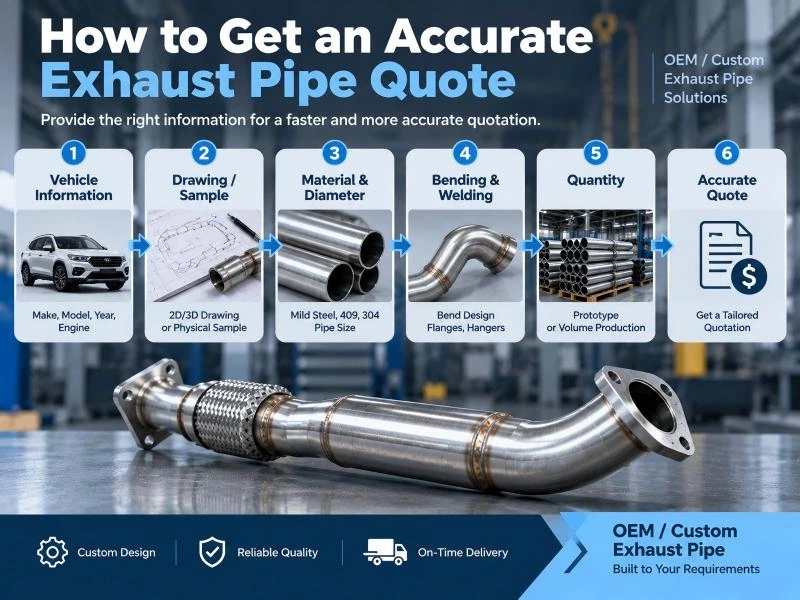
Whether you are sourcing a replacement component or developing an OEM exhaust pipe, providing complete information can reduce quotation uncertainty and shorten the development process.
Before requesting a price, prepare as much of the following information as possible:
- Identify the vehicle. Provide the make, model, production year, and engine specification when the pipe is intended for a specific vehicle.
- Define the exhaust pipe section. Confirm which section needs to be produced or replaced and how it connects to the surrounding components.
- Specify the material. Indicate whether the project requires mild steel, 409 stainless steel, 304 stainless steel, or another specified material.
- Provide dimensions or drawings. Pipe diameter, overall length, bend locations, flange positions, and mounting points all affect pricing.
- State the required quantity. Prototype, small-batch, and volume-production projects have different cost structures.
| Information | Why It Matters |
|---|---|
| Vehicle Make / Model / Year | Helps confirm vehicle-specific fitment requirements |
| Engine | Helps identify the correct exhaust configuration |
| Pipe Diameter | Affects material use, fitment, and exhaust flow requirements |
| Material | Directly affects raw material cost and durability |
| Drawing or Sample | Defines dimensions, bends, flanges, and mounting positions |
| Order Quantity | Influences setup cost and unit pricing |
For OEM and custom projects, AOSU can evaluate exhaust pipe requirements based on drawings, samples, vehicle information, and production quantities. You can review our exhaust pipe solutions or contact us with your project specifications for a quotation.
How to Avoid Overpaying for an Exhaust Pipe Replacement
The lowest advertised exhaust pipe price does not always produce the lowest overall repair cost. A better approach is to determine exactly what needs to be replaced and compare products with similar materials, fitment, and installation requirements.
Before choosing a replacement exhaust pipe:
- Confirm whether the entire assembly or only one damaged pipe section needs replacement.
- Check whether the quoted price is for the part only or includes installation.
- Compare products made from equivalent materials rather than comparing price alone.
- Verify vehicle fitment before ordering a direct-fit replacement.
- Ask whether clamps, gaskets, hangers, or other hardware are included.
- Consider corrosion resistance and expected service life when comparing mild steel and stainless steel.
Do Not Replace More Than Necessary
If damage is limited to one exhaust pipe section, replacing the complete exhaust system may not always be necessary. A proper inspection can help determine whether the problem is isolated or whether corrosion has spread to nearby connections and components.
At the same time, replacing only a visibly damaged area may not be economical if surrounding pipe sections are already heavily corroded. The condition of the complete connection area should therefore be considered before deciding on the repair.
Compare Fitment, Not Just Purchase Price
A universal exhaust pipe may appear cheaper than a direct-fit part, but additional cutting, bending, welding, or adapters can increase the installed cost.
For vehicle-specific replacement, correct bend positions, flange orientation, pipe length, and hanger locations can make installation more straightforward and reduce the need for additional fabrication.
Consider Long-Term Material Cost
A lower-priced mild steel pipe may be sufficient for some applications, while stainless steel can offer better value where moisture, road salt, and corrosion are major concerns.
Instead of comparing only the initial exhaust pipe price, consider how long the component is expected to remain in service and whether premature corrosion could lead to another replacement.
FAQ About Exhaust Pipe Replacement Cost
How much does an exhaust pipe cost?
The price of an exhaust pipe varies depending on the vehicle, material, diameter, length, fitment, and whether the part is universal, direct-fit, OEM, or custom-made. A simple universal pipe section generally costs less than a vehicle-specific stainless steel exhaust pipe with multiple bends, flanges, and mounting points.
How much does it cost to replace an exhaust pipe?
The total exhaust pipe replacement cost may include the pipe itself, clamps, gaskets, hangers, labor, cutting, welding, and installation. A straightforward bolt-on replacement usually costs less than a repair involving heavy corrosion, difficult access, or custom fabrication.
Why are stainless steel exhaust pipes more expensive?
Stainless steel has a higher material cost than mild steel, but it generally provides better corrosion resistance and durability. The final price also depends on the stainless steel grade, pipe dimensions, bending complexity, welding, and vehicle-specific requirements.
Is an OEM exhaust pipe more expensive than an aftermarket pipe?
OEM exhaust pipes are often more expensive because they are produced to original vehicle specifications and may carry higher sourcing costs. Aftermarket direct-fit pipes can offer a lower-cost replacement option, while custom exhaust pipes are usually quoted according to project specifications and order quantity.
Does exhaust pipe diameter affect the price?
Yes. Larger-diameter pipes generally require more material, and certain diameters may also require different bending or fabrication processes. However, diameter should be selected according to vehicle fitment and exhaust flow requirements rather than price alone.
How much does a custom exhaust pipe cost?
Custom exhaust pipes usually do not have a fixed retail price. Cost depends on the material, diameter, length, bend geometry, flanges, hangers, welding requirements, prototype development, and production quantity. Providing drawings, samples, vehicle information, and expected order volume helps produce a more accurate quotation.
Is it cheaper to repair or replace an exhaust pipe?
It depends on the extent of the damage. Localized damage may sometimes be repaired, while severe corrosion, cracking, or damage across a larger section may make replacement more practical. The condition of nearby joints and mounting points should also be checked before deciding.
Conclusion
There is no single answer to how much an exhaust pipe costs or how much it costs to replace one. The final price depends on the vehicle, material, pipe dimensions, manufacturing complexity, fitment, additional hardware, and installation labor.
For individual vehicle repairs, it is important to compare the price of the exhaust pipe separately from the complete installed cost. A lower-priced universal pipe may require additional fabrication, while a properly matched direct-fit component may reduce installation work.
For OEM and custom projects, exhaust pipe pricing is typically based on specifications rather than a fixed retail price. Material grade, diameter, bend layout, flanges, welding, prototype requirements, and production quantity all influence the final quotation.
AOSU supports OEM and custom exhaust pipe production based on vehicle information, drawings, physical samples, materials, dimensions, and order requirements. For project-specific pricing, contact AOSU with your technical requirements and expected quantity.