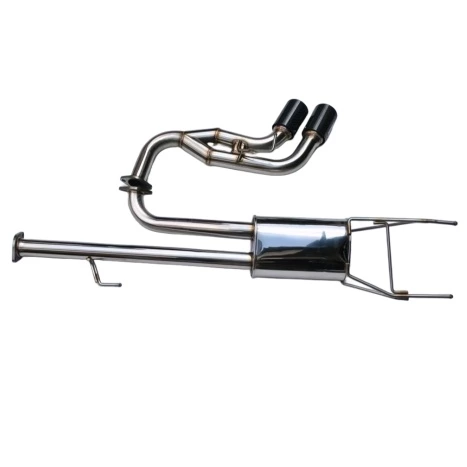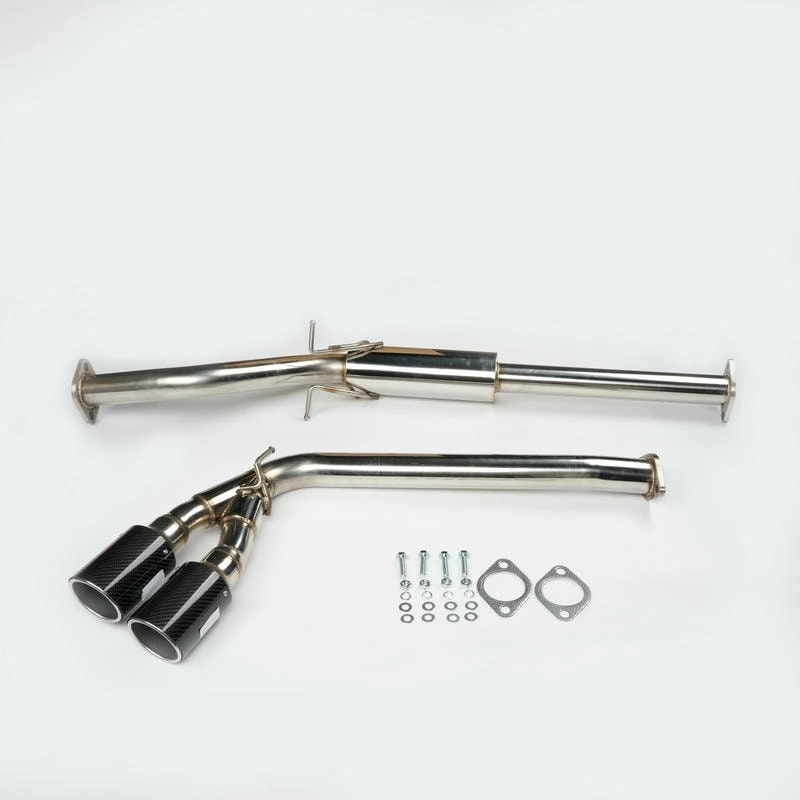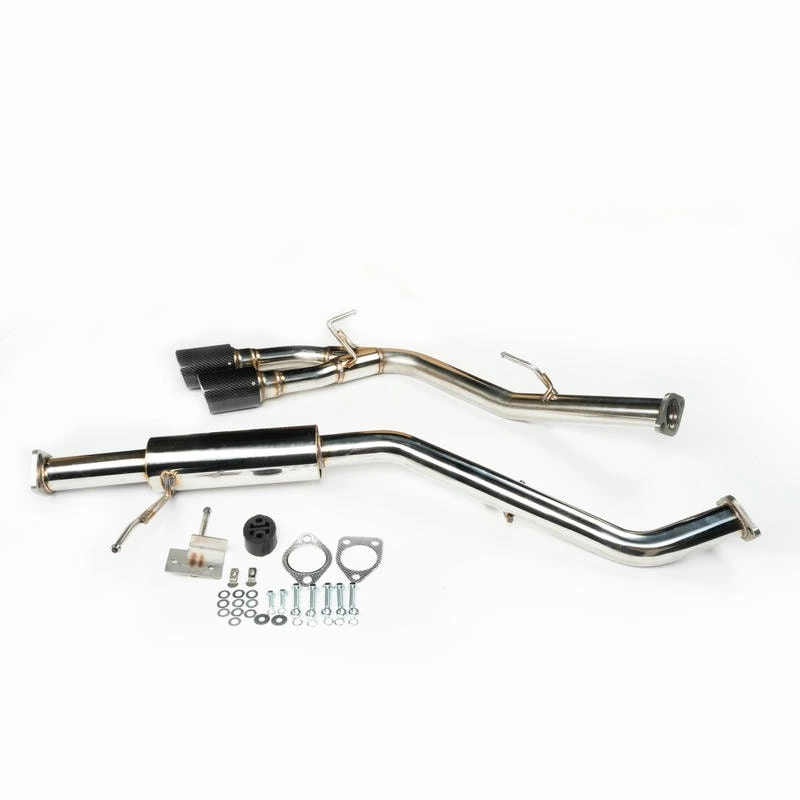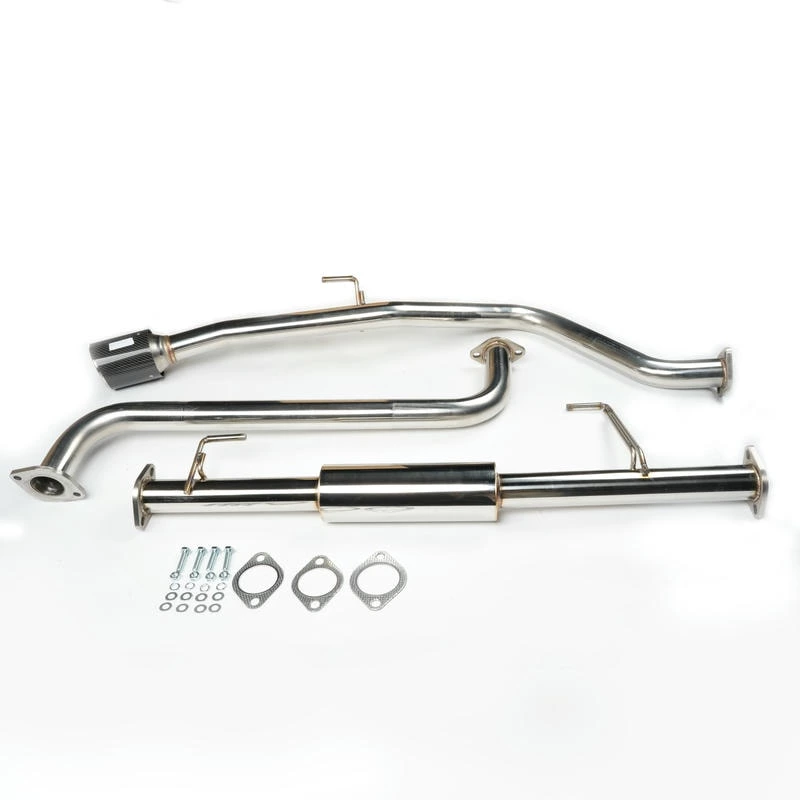
How to Measure an Exhaust Pipe: Diameter, Length & Fitment Guide
Choosing the correct exhaust pipe replacement starts with accurate measurement. An exhaust pipe that has the wrong diameter, length, bend position, or connection design may not fit properly, even if it appears similar to the original component.
Many replacement problems happen because buyers only check the pipe size but overlook other important details such as routing, flange position, hanger location, and vehicle-specific fitment. Knowing how to measure an exhaust pipe helps ensure the replacement part matches the original design and installation requirements.
Before ordering a replacement or requesting a custom exhaust pipe, it is important to collect the correct measurements. The most common information includes pipe diameter, overall length, bend locations, connection type, and vehicle application details.
For OEM and custom projects, AOSU provides exhaust pipe solutions based on vehicle specifications, drawings, samples, dimensions, and production requirements. Accurate measurements help manufacturers develop components with better fitment and consistency.
How to Measure an Exhaust Pipe?
Measuring an exhaust pipe is not only about checking the tube diameter. A complete measurement process should confirm the pipe section, dimensions, shape, and connection points to ensure the replacement component matches the original application.
The basic measurement process includes:
- Identify the exhaust pipe section
Determine which part of the exhaust system needs to be replaced. - Measure the pipe diameter
Check the outside diameter of the tubing to confirm the correct size. - Measure the pipe length
Record the overall length and important straight sections. - Check bends and routing
Measure bend angles, locations, and available installation space. - Measure connection points
Confirm flanges, hangers, clamps, and other mounting features. - Verify vehicle fitment
Match the measurements with the vehicle make, model, year, and engine.
| Measurement | Why It Matters |
|---|---|
| Pipe Diameter | Determines compatibility with existing exhaust components |
| Pipe Length | Ensures the replacement pipe fits the available installation space |
| Bend Position | Matches the original exhaust routing |
| Flange and Connection Size | Ensures proper connection with surrounding components |
| Vehicle Information | Confirms application-specific fitment |
A complete exhaust pipe measurement should combine physical dimensions with vehicle information. Two pipes may have the same diameter but different bends, lengths, or mounting positions, making them unsuitable as direct replacements.
Key Point: The correct exhaust pipe measurement includes size, shape, connections, and vehicle fitment—not just the tube diameter.
How to Measure Exhaust Pipe Diameter?
Measuring the exhaust pipe diameter is one of the most important steps when selecting a replacement exhaust pipe. Choosing the wrong diameter can cause fitment problems, connection issues, or require additional modification during installation.
The most common mistake is measuring the wrong part of the pipe. Exhaust tubing is usually specified by its outside diameter (OD), while many people measure the inside opening instead. For accurate replacement, the outside diameter of the tubing should normally be confirmed.
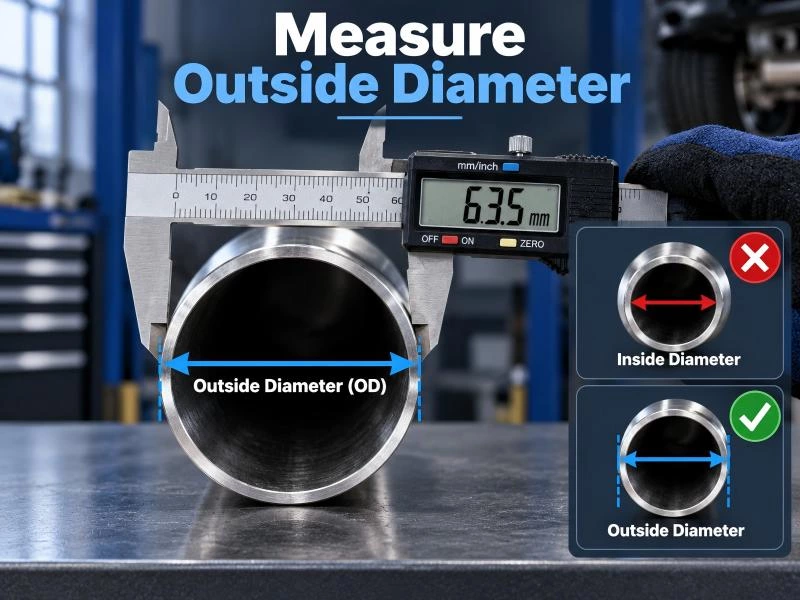
Measure the Outside Diameter of the Exhaust Pipe
To measure an exhaust pipe diameter, use a measuring tool around the outside edge of the tube. A digital caliper provides the most accurate result, while a tape measure can be used for a quick measurement.
Recommended measurement steps:
- Clean the pipe surface to remove rust, dirt, or debris.
- Measure across the outside edge of the tubing.
- Take measurements from a straight section of pipe.
- Record the measurement in inches or millimeters.
- Compare the measurement with the replacement pipe specification.
| Measurement Type | Description | Common Use |
|---|---|---|
| Outside Diameter (OD) | Measurement across the outside of the exhaust tube | Most common exhaust pipe sizing reference |
| Inside Diameter (ID) | Measurement of the internal opening | Related to flow area, but not usually used for ordering tubing |
| Wall Thickness | Difference between outside and inside dimensions | Affects strength and internal diameter |
Exhaust Pipe Diameter Measurement Example
For example, an exhaust pipe commonly described as a 2.5-inch exhaust pipe generally refers to tubing with an outside diameter close to 2.5 inches (approximately 63.5 mm). However, the actual internal diameter can vary depending on the pipe wall thickness.
This is why comparing only the inside opening of an old exhaust pipe may result in selecting an incorrect replacement size.
Tools for Measuring an Exhaust Pipe
| Tool | Accuracy | Best Use |
|---|---|---|
| Digital Caliper | High | Precise diameter measurement |
| Pipe Diameter Gauge | High | Professional exhaust measurement |
| Tape Measure | Medium | Quick measurement when tools are limited |
| Ruler | Lower | Basic estimation only |
Do Not Measure Only the Diameter
Although diameter is an important specification, it is not the only factor that determines whether an exhaust pipe will fit correctly. A replacement pipe also needs to match the vehicle routing, bend position, length, and connection design.
For example, two exhaust pipes may both have a 2.5-inch diameter but still be different because one has different bend angles, flange locations, or mounting points.
After confirming the diameter, the next step is measuring the length, bends, and routing of the exhaust pipe to ensure proper fitment.
How to Measure Exhaust Pipe Length?
Measuring exhaust pipe length is another important step when selecting a replacement exhaust pipe. Even if the diameter is correct, an incorrect pipe length can affect installation, connection position, and alignment with other exhaust components.
Exhaust pipes are not always measured as a simple straight line because many automotive pipes include bends, curves, flanges, and connection sections. A complete measurement should consider the overall length as well as important reference points along the pipe.
Measure the Overall Exhaust Pipe Length
The overall length refers to the total distance from one end of the exhaust pipe to the other. This measurement helps determine whether the replacement component will match the available installation space.
When measuring overall exhaust pipe length:
- Measure from the actual connection point at one end to the connection point at the other end.
- Include straight sections and curved sections in the measurement.
- Record flange, slip joint, or connection positions.
- Compare the measurement with the original exhaust pipe before ordering a replacement.
Measure Straight Sections and Bend-to-Bend Distance
For exhaust pipes with multiple bends, the distance between each bend is often as important as the total length. A pipe with the same overall length may still fail to fit if the bend positions are different.
| Measurement | Purpose |
|---|---|
| Overall Length | Confirms the total pipe size |
| Straight Section Length | Matches available installation space |
| Bend-to-Bend Distance | Ensures correct routing and alignment |
| End-to-Connection Distance | Confirms flange or joint position |
Why Exhaust Pipe Length Affects Fitment
Vehicle exhaust systems are designed around limited space under the vehicle. The exhaust pipe must avoid interference with components such as the chassis, suspension, fuel system, heat shields, and other nearby parts.
A replacement pipe that is slightly too long or too short may create problems such as:
- Incorrect connection alignment
- Additional stress on exhaust joints
- Incorrect hanger position
- Contact with surrounding vehicle components
- Need for cutting or additional fabrication
How to Measure a Bent Exhaust Pipe
Measuring a bent exhaust pipe requires more than following the outside curve. For accurate replacement, it is important to record the pipe shape, bend locations, and reference points.
Useful measurements include:
- Start and end connection points
- Location of each bend
- Distance between bends
- Approximate bend direction
- Clearance from nearby components
Tip: Taking clear photos from different angles together with measurements can help manufacturers better understand the original exhaust pipe design.
Length Measurement for OEM and Custom Exhaust Pipes
For OEM and custom exhaust pipe production, length measurements are usually combined with drawings, samples, and vehicle information. A single length value is often not enough because production also requires accurate bend positions, connection details, and mounting locations.
Providing complete measurement information helps reduce prototype adjustments and improves the accuracy of the final exhaust pipe.
After measuring diameter and length, the next step is checking the exhaust pipe bends and routing to confirm the complete shape and installation requirements.
How to Measure Exhaust Pipe Bends and Routing?
Exhaust pipe bends and routing are critical measurements when replacing or customizing an exhaust pipe. A pipe with the correct diameter and length may still fail to install properly if the bend angles, bend positions, or routing path do not match the original design.
Automotive exhaust pipes are usually shaped to fit limited space underneath the vehicle. The pipe must follow a specific route while maintaining clearance from the chassis, suspension components, heat shields, fuel lines, and other nearby parts.
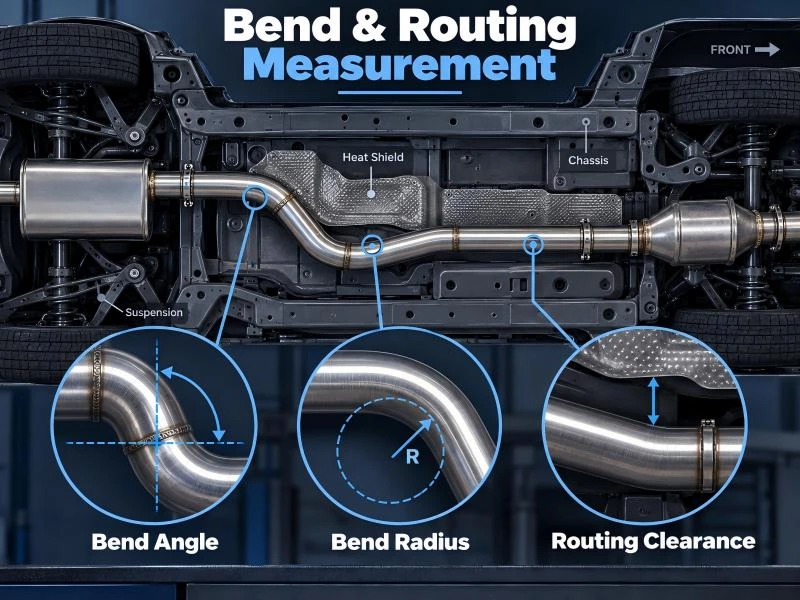
Measure Exhaust Pipe Bend Locations
When measuring a bent exhaust pipe, record where each bend starts and ends instead of only measuring the total curve length. These reference points help reproduce the original pipe shape more accurately.
Important bend measurements include:
- Distance from the pipe end to the first bend
- Distance between individual bends
- Direction of each bend
- Approximate bend angle
- Clearance around surrounding components
Check Exhaust Pipe Bend Angle
The bend angle determines how the exhaust pipe changes direction during installation. Common exhaust pipe bends include 45-degree, 90-degree, and U-shaped bends, but vehicle-specific applications may require more complex shapes.
| Bend Measurement | Why It Matters |
|---|---|
| Bend Angle | Determines the direction change of the pipe |
| Bend Position | Ensures the pipe follows the correct vehicle routing |
| Bend Radius | Affects pipe shape, clearance, and manufacturing method |
| Pipe Orientation | Confirms connection and mounting alignment |
Why Bend Radius Matters
Bend radius affects both the physical shape of an exhaust pipe and the manufacturing process used to produce it. A tighter bend may require more precise control to maintain the intended pipe diameter and avoid excessive deformation.
For OEM and custom exhaust pipes, manufacturers often use controlled bending processes such as mandrel bending to maintain consistent pipe geometry during production.
Accurate bend control helps achieve:
- Better vehicle fitment
- Consistent pipe dimensions
- Correct clearance under the vehicle
- Reliable connection with surrounding components
How to Record Exhaust Pipe Routing
The routing path describes how the exhaust pipe travels from one connection point to another. When replacing an existing pipe, take measurements and photos that show the complete installation position.
Useful information includes:
- Front and rear connection locations
- Pipe direction changes
- Distance from the vehicle floor
- Clearance from suspension and heat-sensitive parts
- Hanger and mounting positions
Measurement Tip: Take photos of the original exhaust pipe from multiple angles and mark important reference points before removing the component.
Mandrel Bending for Custom Exhaust Pipes
For custom exhaust pipe production, accurate bend control is essential because each vehicle application may require a different routing design. Mandrel bending helps maintain a more consistent pipe shape through curved sections compared with methods that significantly deform the tube.
For OEM projects, manufacturers evaluate bend position, diameter, material, and connection design together to ensure the finished exhaust pipe matches the required application.
After confirming diameter, length, and bends, the next step is checking the exhaust pipe connection points to complete the measurement process.
How to Measure an Exhaust Pipe Without Removing It?
In some situations, removing the exhaust pipe is not practical before ordering a replacement. The vehicle may still be in use, the pipe may be difficult to access, or the owner may only need an initial size estimate. In these cases, an exhaust pipe can be measured while it remains installed on the vehicle.
However, measuring an installed exhaust pipe requires more attention because some areas may be hidden by heat shields, brackets, or other vehicle components. The goal is to collect enough information to identify the correct replacement pipe while avoiding unnecessary removal work.
1. Check the Vehicle Information First
Before measuring the physical pipe, collect basic vehicle information. Vehicle details can help narrow down the correct exhaust pipe application and reduce measurement errors.
Useful vehicle information includes:
- Vehicle brand and model
- Production year
- Engine type
- Vehicle trim or configuration
- Existing exhaust modifications, if any
For vehicle-specific replacement exhaust pipes, measurements should always be compared with the actual vehicle application because the same model name may have different exhaust configurations depending on year, engine, or market.
2. Measure the Visible Exhaust Pipe Section
If part of the exhaust pipe is exposed, measure the visible sections first. A digital caliper is recommended for diameter measurement, while a tape measure can help estimate length and routing.
| Measurement | How to Check |
|---|---|
| Pipe Diameter | Measure the outside diameter of the visible tubing |
| Pipe Length | Measure accessible straight sections and estimate total routing |
| Bend Direction | Record where the pipe changes direction |
| Connection Area | Check visible flanges, clamps, or joints |
3. Use Photos to Record Exhaust Pipe Routing
Photos are especially useful when the exhaust pipe cannot be fully removed. Multiple viewing angles can help show the pipe shape, connection points, and installation position.
Recommended photos include:
- Full view of the exhaust pipe underneath the vehicle
- Close-up of both connection ends
- Photos of bends and mounting points
- Images showing clearance from nearby components
Tip: Combining measurements with clear photos often provides more useful information than measurements alone, especially for custom exhaust pipe development.
4. Check Existing Part Numbers or Vehicle References
If the original exhaust pipe has an identification label, part number, or OE reference, this information can help confirm the correct replacement application.
For OEM-style replacement projects, useful references may include:
- Original equipment part number
- Vehicle model code
- Engine specification
- Existing supplier information
Limitations of Measuring an Installed Exhaust Pipe
Although measuring without removing the pipe is possible, some details may be difficult to confirm accurately. Hidden bends, internal dimensions, flange angles, and mounting positions may require additional inspection.
| Measurement Challenge | Possible Solution |
|---|---|
| Hidden pipe sections | Use photos, vehicle information, or a sample pipe |
| Unclear bend positions | Record multiple angles and reference points |
| Unknown connection size | Measure flange, clamp, or joint dimensions |
| Modified exhaust system | Provide actual measurements instead of relying only on vehicle data |
For simple replacement decisions, measurements from an installed exhaust pipe may be enough. For OEM and custom production, however, manufacturers usually need more complete information such as drawings, samples, connection details, and production requirements.
AOSU supports custom exhaust pipe development based on vehicle applications, physical samples, technical drawings, and manufacturing requirements to help achieve accurate fitment.
Common Exhaust Pipe Measurement Mistakes
Accurate exhaust pipe measurement is essential when selecting a replacement component. Many fitment problems happen because one important dimension is missed or the wrong measurement method is used.
A pipe may appear similar to the original part but still fail to install correctly because of differences in diameter, length, bend position, or connection design. Understanding common measurement mistakes can help avoid incorrect purchases and unnecessary modifications.
1. Measuring Inside Diameter Instead of Outside Diameter
One of the most common mistakes is measuring the inside opening of the pipe and using that value as the exhaust pipe size. Most exhaust tubing specifications are based on the outside diameter (OD).
| Wrong Approach | Why It Causes Problems | Correct Method |
|---|---|---|
| Measuring inside diameter only | May result in selecting the wrong tubing size | Measure the outside diameter of the pipe |
| Ignoring wall thickness | Creates inaccurate size comparisons | Consider OD and material thickness together |
2. Measuring Only the Straight Section
Some exhaust pipes include multiple bends and complex routing. Measuring only the visible straight section does not provide enough information for a proper replacement.
A replacement pipe with the correct diameter but different bend positions may not align with the vehicle chassis or existing exhaust components.
Always record:
- Total pipe length
- Straight section length
- Bend locations
- Connection positions
3. Ignoring Bend Direction and Routing
Exhaust pipes are designed to follow a specific route under the vehicle. Two pipes can have the same diameter and length but different shapes, making them unsuitable replacements.
Common routing details that should be checked include:
- Direction of each bend
- Distance between bends
- Clearance from nearby components
- Position of mounting points
4. Forgetting Flanges, Hangers and Connection Points
Another common mistake is measuring only the tubing while ignoring how the exhaust pipe connects to the rest of the system.
A replacement exhaust pipe also needs to match:
- Flange size
- Bolt pattern
- Clamp connection
- Hanger position
- Mounting bracket location
Incorrect connection measurements can cause installation problems even when the pipe diameter and length appear correct.
5. Relying Only on Vehicle Model Information
Vehicle information is useful, but relying only on make and model may not always be enough. Different production years, engines, markets, or previous modifications can result in different exhaust configurations.
| Information Source | Reliability for Fitment |
|---|---|
| Vehicle Model Only | Useful starting point but may not define every specification |
| Vehicle + Year + Engine | More accurate application identification |
| Drawing or Physical Sample | Best for custom production and precise reproduction |
6. Ignoring Material Differences
When replacing an exhaust pipe, some buyers compare only dimensions and overlook material differences. Pipes with the same size can have different service performance depending on whether they are made from mild steel, 409 stainless steel, or 304 stainless steel.
Material selection should consider:
- Operating environment
- Corrosion exposure
- Expected service life
- Vehicle application
7. Not Providing Enough Information for Custom Exhaust Pipes
For OEM and custom exhaust pipe projects, incomplete measurement information can increase development time and require additional confirmation before production.
The more complete the technical information provided, the easier it is to evaluate manufacturing requirements and produce an accurate quotation.
Recommended information for custom exhaust pipe projects:
- Vehicle application
- Pipe dimensions
- Material specification
- Drawing or sample
- Connection details
- Order quantity
Avoiding these common measurement mistakes can improve replacement accuracy, reduce installation problems, and make custom exhaust pipe development more efficient.
Choosing the Right Replacement Exhaust Pipe
After measuring the exhaust pipe diameter, length, bends, and connection points, the next step is selecting a replacement pipe that matches the vehicle requirements. Correct measurements provide the foundation, but the final choice should also consider material, application, manufacturing quality, and long-term durability.
A suitable replacement exhaust pipe should not only fit the installation position but also match the expected operating environment and vehicle requirements.
1. Confirm Vehicle Fitment
Vehicle compatibility is the first factor to confirm when selecting an exhaust pipe. Even small differences between vehicle versions can affect pipe routing, connection positions, and mounting points.
Confirm the following vehicle information:
- Vehicle brand and model
- Production year
- Engine type
- Exhaust configuration
- Original equipment specifications
For direct replacement applications, a vehicle-specific exhaust pipe usually provides better fitment than a universal pipe because the dimensions and connection locations are designed for the intended application.
2. Select the Appropriate Exhaust Pipe Material
The material of an exhaust pipe affects durability, corrosion resistance, and service life. The best material depends on the vehicle environment, operating conditions, and expected usage.
| Material | Characteristics | Suitable Applications |
|---|---|---|
| Mild Steel | Lower initial cost with basic performance | Cost-sensitive replacement applications |
| 409 Stainless Steel | Good balance of durability, heat resistance, and cost | Many OEM automotive exhaust applications |
| 304 Stainless Steel | Higher corrosion resistance and premium durability | Applications requiring longer service life |
3. Match Pipe Diameter Requirements
The exhaust pipe diameter should match the vehicle design and replacement requirements. Choosing a pipe based only on appearance can lead to incorrect fitment or unnecessary modification.
When selecting the diameter, consider:
- Original exhaust pipe size
- Engine application
- Connection dimensions
- Available installation space
- Vehicle-specific requirements
A larger diameter is not always the correct choice. Proper sizing depends on the complete exhaust design and intended application.
4. Check Bend Design and Routing
A replacement exhaust pipe must follow the correct routing path underneath the vehicle. Bend position, angle, and radius directly affect whether the pipe can be installed without interference.
For custom exhaust pipes, manufacturers evaluate:
- Bend locations
- Bend radius
- Pipe orientation
- Clearance requirements
- Mounting position
5. Consider OEM and Custom Exhaust Pipe Options
Standard replacement pipes may be suitable for common repair needs, but some applications require custom manufacturing. OEM and custom exhaust pipes are typically developed according to specific vehicle requirements, drawings, samples, or production specifications.
| Application | Recommended Option |
|---|---|
| Simple replacement | Vehicle-specific replacement exhaust pipe |
| Modified vehicle application | Custom exhaust pipe |
| OEM production | Custom development based on drawings or samples |
| Special dimensions or routing | Engineered exhaust pipe solution |
6. Verify Manufacturing Quality
A properly measured exhaust pipe still requires reliable manufacturing to achieve consistent fitment. Production quality can affect bend accuracy, weld strength, dimensional consistency, and final installation results.
Important manufacturing considerations include:
- Accurate tube bending
- Consistent weld quality
- Correct flange positioning
- Dimensional inspection
- Surface and material quality
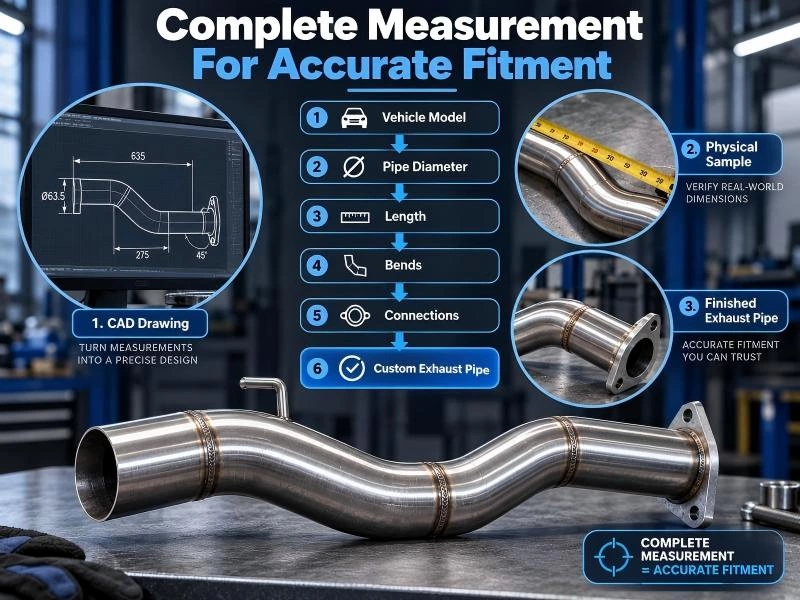
For OEM and custom exhaust pipe projects: Providing accurate measurements, drawings, samples, and vehicle information helps manufacturers create a better-fitting and more reliable component.
AOSU provides custom exhaust pipe solutions for automotive applications, supporting development from measurement review and prototype evaluation to production manufacturing.
FAQ About Exhaust Pipe Measurement
How do I measure an exhaust pipe diameter?
To measure an exhaust pipe diameter, measure the outside diameter of the tubing using a digital caliper or another suitable measuring tool. Exhaust pipe sizes are commonly based on outside diameter (OD), not the inside opening of the pipe.
For accurate replacement selection, also consider wall thickness, connection type, and vehicle application because diameter alone does not guarantee correct fitment.
Do I measure inside or outside diameter of an exhaust pipe?
In most exhaust pipe replacement applications, the outside diameter (OD) is the key measurement. Measuring only the inside diameter can result in choosing an incorrect pipe size because wall thickness affects the internal opening.
When requesting a replacement or custom exhaust pipe, provide the outside diameter together with material, vehicle information, and connection details.
How can I measure an exhaust pipe without removing it?
An exhaust pipe can often be measured while installed by checking visible sections, measuring the outside diameter, recording accessible lengths, and taking photos of bends and connection points.
However, hidden sections, flange positions, and complex routing may require additional information such as a physical sample, drawing, or vehicle specification for accurate reproduction.
What size exhaust pipe do I need?
The correct exhaust pipe size depends on the original vehicle design, engine application, exhaust configuration, and installation requirements. The largest available diameter is not always the best choice because proper fitment and system compatibility are also important.
Before selecting a replacement pipe, confirm the original diameter, length, bend layout, and connection points.
Why does my replacement exhaust pipe not fit?
A replacement exhaust pipe may not fit because of incorrect measurements, different bend positions, wrong flange dimensions, incorrect hanger locations, or differences between vehicle versions.
Common measurement issues include checking only the pipe diameter while ignoring routing, connections, and mounting details.
Can I make a custom exhaust pipe from measurements?
Yes. Custom exhaust pipes can be developed from accurate measurements, drawings, or physical samples. For custom production, manufacturers usually need information about pipe dimensions, material, bends, connection points, vehicle application, and required quantity.
Complete technical information helps reduce development adjustments and improves the accuracy of the final exhaust pipe.
What information should I provide when ordering a custom exhaust pipe?
For OEM or custom exhaust pipe projects, providing detailed information helps create a more accurate quotation and production plan.
| Information | Purpose |
|---|---|
| Vehicle Make and Model | Confirms application requirements |
| Year and Engine | Helps identify the correct exhaust configuration |
| Pipe Measurements | Defines size and fitment requirements |
| Drawing or Sample | Provides accurate geometry information |
| Material Requirement | Determines durability and cost considerations |
| Quantity | Affects production planning and quotation |
Accurate exhaust pipe measurement helps prevent incorrect purchases, installation problems, and unnecessary modifications. Whether replacing an existing component or developing a custom exhaust pipe, complete measurement information is the foundation for a successful fit.
Conclusion
Knowing how to measure an exhaust pipe is an important step before choosing a replacement component. Accurate measurement helps confirm that the new pipe matches the required diameter, length, bend design, connection points, and vehicle installation requirements.
A complete exhaust pipe measurement should go beyond checking the tube size. Important details such as outside diameter, overall length, bend locations, flange dimensions, hanger positions, and routing design all affect whether the replacement pipe will fit correctly.
For standard replacement applications, vehicle information combined with accurate measurements can help identify a suitable exhaust pipe. For OEM and custom projects, additional details such as drawings, physical samples, material requirements, and production quantity are usually needed to develop a reliable solution.
AOSU provides OEM and custom exhaust pipe solutions for different automotive applications. With support for tube bending, welding, dimensional control, and customized production, AOSU helps customers develop exhaust pipes based on specific vehicle requirements and project needs.
If you need a replacement or custom exhaust pipe, providing complete measurement information can make the quotation process faster and improve final fitment accuracy. You can also contact AOSU with your vehicle details, drawings, samples, or production requirements for further evaluation.