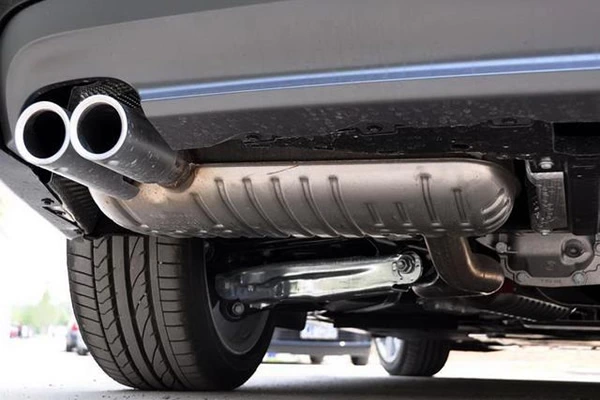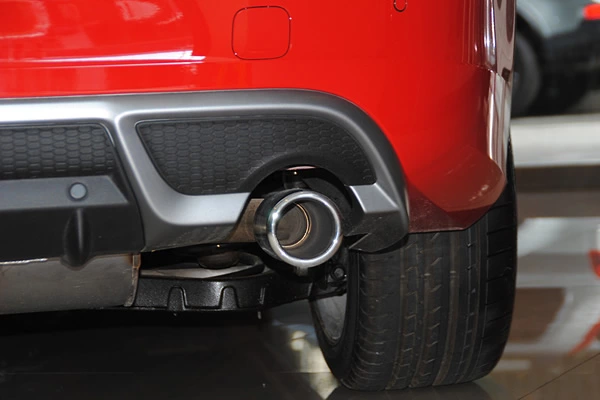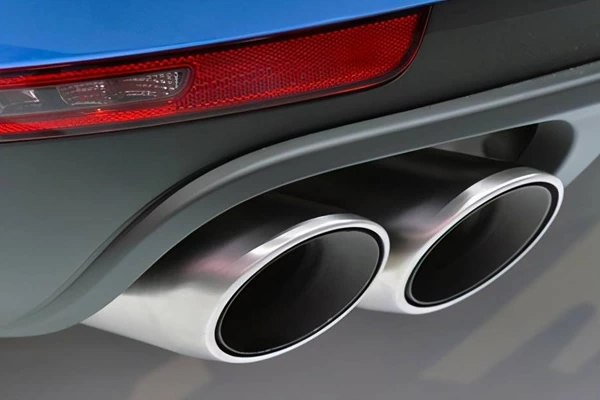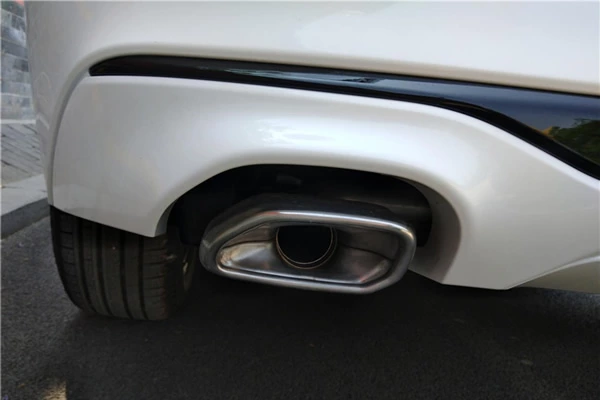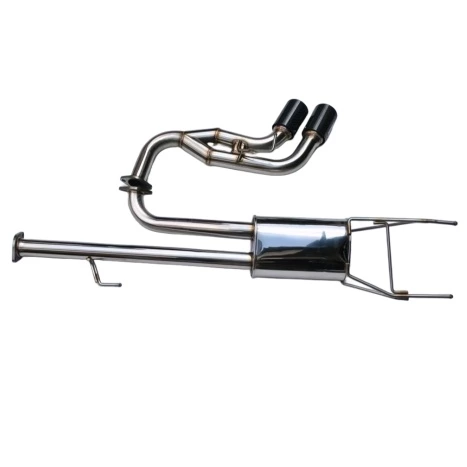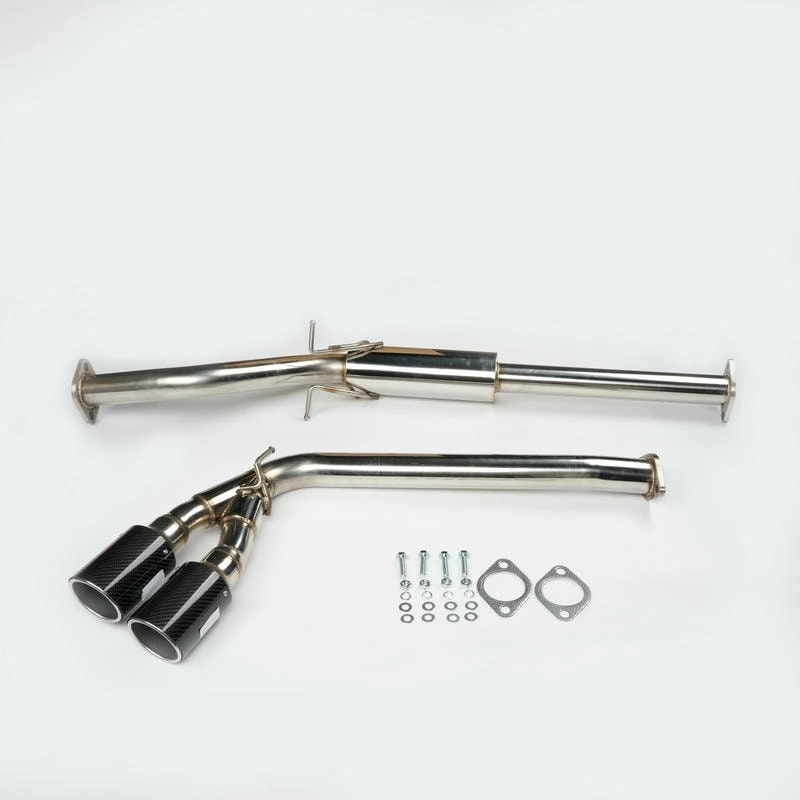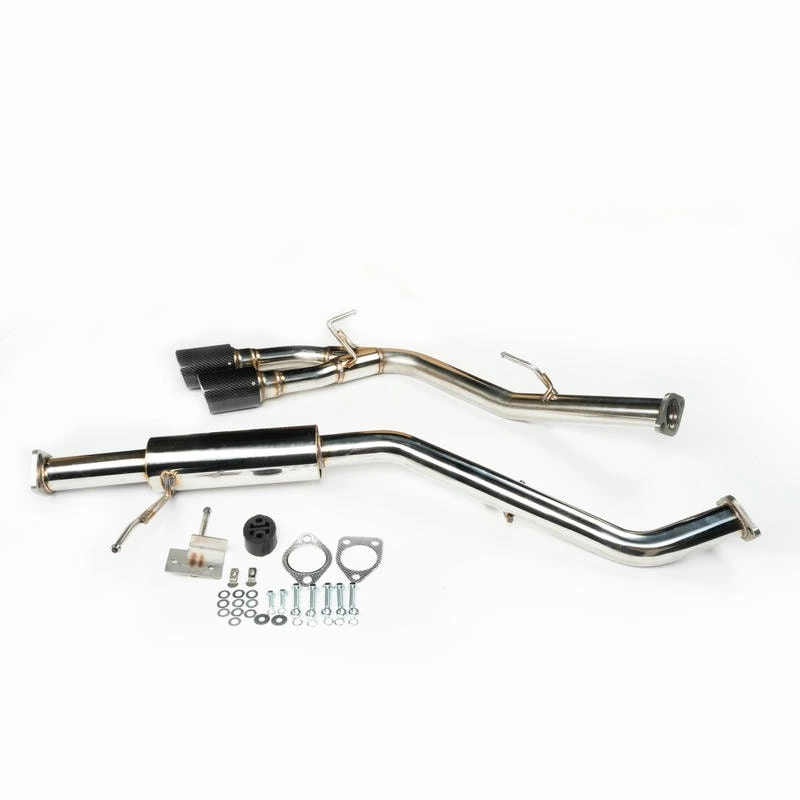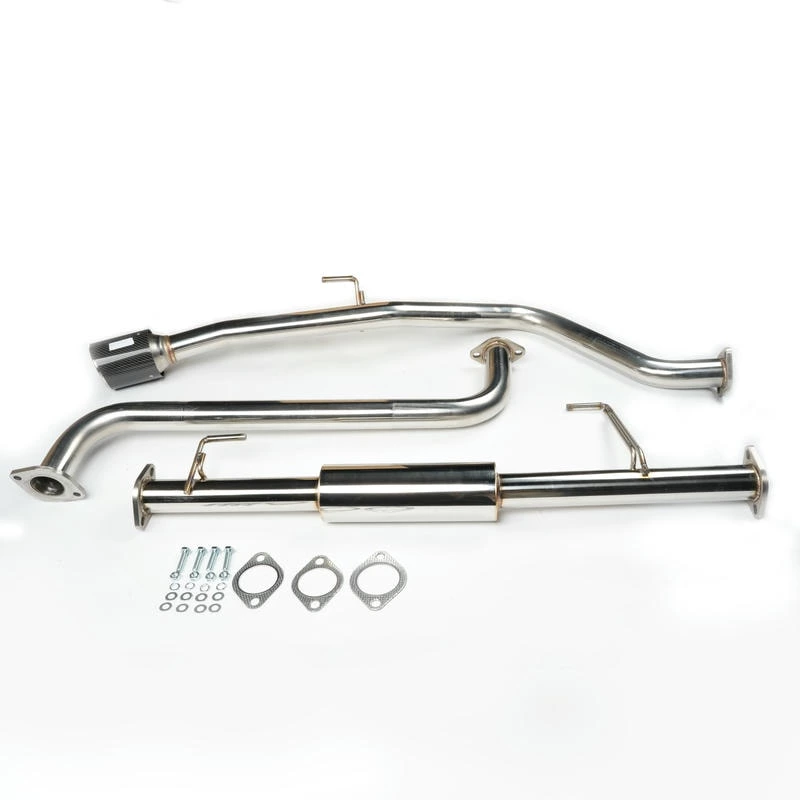
Stainless Steel Exhaust Pipe: Benefits, Types and Applications
Stainless steel exhaust pipes are widely used in automotive exhaust systems because they provide a strong balance between durability, corrosion resistance, heat resistance, and long-term reliability. Compared with traditional exhaust materials, stainless steel can better withstand the demanding conditions found underneath vehicles, including high temperatures, moisture, road salt, and continuous vibration.
Choosing the right exhaust pipe material is an important part of exhaust system design. While pipe diameter, routing, and configuration affect exhaust flow and performance, material selection determines how well the exhaust component performs over years of operation.
A properly designed stainless steel exhaust pipe helps maintain stable exhaust flow while reducing corrosion-related issues and extending service life. For different vehicle platforms and applications, stainless steel exhaust solutions can be customized according to vehicle structure, installation requirements, and performance expectations.
From passenger vehicles and performance cars to commercial applications, stainless steel exhaust pipes have become a common choice where durability and reliable performance are required. Learn more about our exhaust pipe solutions for different automotive applications.
What Is a Stainless Steel Exhaust Pipe?
A stainless steel exhaust pipe is a component of an automotive exhaust system designed to transfer exhaust gases away from the engine while maintaining efficient flow through the system. It connects different exhaust components and provides the necessary pathway for gases to move from the engine area to the rear of the vehicle.
Unlike ordinary steel pipes, stainless steel exhaust pipes use corrosion-resistant materials that help protect against environmental exposure and thermal stress. This makes them suitable for vehicles operating in challenging conditions where exhaust components experience frequent temperature changes and contact with moisture or road contaminants.
The exhaust pipe is an important part of the overall exhaust structure. Its material, diameter, bending design, and connection points all influence system performance, installation accuracy, and service life. For a complete overview of automotive exhaust pipe applications, explore our automotive exhaust pipe solutions.
Why Stainless Steel Is Used for Exhaust Pipes
Automotive exhaust components operate in one of the most demanding areas of a vehicle. Exhaust gases can reach high temperatures, while the external environment exposes pipes to water, humidity, dirt, and chemicals. Because of these conditions, material selection plays an important role in exhaust durability.
Stainless steel is preferred for many exhaust applications because it provides better resistance to corrosion and temperature-related stress compared with many conventional materials. These characteristics help maintain structural strength and reliable operation throughout the vehicle's service life.
Key Benefits of Stainless Steel Exhaust Pipes
The choice of exhaust pipe material directly affects durability, maintenance requirements, and long-term system performance. Since exhaust components operate under high temperatures and are exposed to moisture, road conditions, and chemical substances, the material needs to withstand both thermal and environmental stress.
A stainless steel exhaust pipe provides a combination of strength, corrosion resistance, and heat durability, making it a preferred option for many automotive applications. These advantages allow stainless steel exhaust systems to maintain reliable performance under demanding driving conditions.
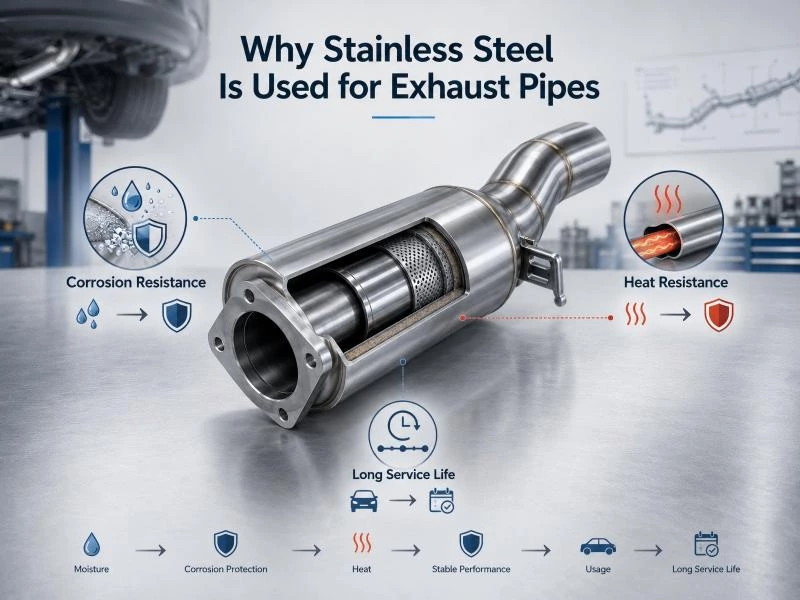
1. Superior Corrosion Resistance
One of the biggest advantages of stainless steel exhaust pipes is their ability to resist corrosion. Exhaust components are frequently exposed to water, humidity, condensation, and road salt, all of which can accelerate rust formation on less resistant materials.
Stainless steel helps protect the pipe surface from environmental damage, especially in regions with high humidity, coastal climates, or winter road conditions where salt exposure is common.
Corrosion Resistance Advantages
- Reduced risk of rust and surface deterioration
- Better protection against moisture and road salt
- Improved durability in harsh environments
2. Reliable Performance Under High Temperatures
Exhaust pipes experience repeated heating and cooling cycles during vehicle operation. From engine startup to high-load driving conditions, the material must maintain its shape, strength, and structural stability.
Stainless steel offers good heat resistance, helping exhaust components handle thermal stress more effectively. This makes it suitable for applications where consistent performance is required over extended periods.
For performance vehicles and vehicles operating under heavier loads, choosing a material with stable high-temperature performance is especially important.
3. Longer Service Life and Lower Maintenance Requirements
Durability is a key consideration when selecting automotive exhaust components. A pipe that experiences corrosion, cracking, or structural damage may require replacement earlier than expected, increasing maintenance costs.
By combining corrosion resistance with mechanical strength, stainless steel exhaust pipes can provide longer service life compared with many standard materials. This makes them a practical choice for customers looking for reliable long-term exhaust solutions.
4. Suitable for Different Automotive Applications
Another advantage of stainless steel is its flexibility across different vehicle applications. From passenger cars and performance vehicles to commercial vehicles, stainless steel exhaust pipes can be designed according to specific requirements.
- Passenger vehicles requiring durability and reliable daily performance
- Performance vehicles requiring stable exhaust flow and heat resistance
- OEM applications requiring consistent dimensions and production quality
Material selection is only one part of exhaust pipe development. Factors such as pipe diameter, bending design, and vehicle fitment also influence overall performance.
Material Performance Summary
| Performance Factor | Stainless Steel Exhaust Pipe Advantage |
|---|---|
| Corrosion Resistance | Helps withstand moisture, salt, and environmental exposure |
| Heat Resistance | Maintains stability under repeated high-temperature cycles |
| Durability | Supports longer service life and reliable operation |
| Application Flexibility | Suitable for different automotive exhaust requirements |
For automotive projects requiring specific materials, dimensions, or configurations, stainless steel exhaust pipes can be developed according to vehicle requirements and application conditions.
Stainless Steel Exhaust Pipe vs Mild Steel Exhaust Pipe
When selecting an exhaust pipe material, stainless steel and mild steel are two commonly considered options. Both materials can be used for automotive exhaust applications, but they have different characteristics in terms of corrosion resistance, durability, heat performance, and cost.
The right choice depends on the vehicle application, operating environment, expected service life, and project requirements. While stainless steel is often selected for long-term durability, mild steel remains a practical option for applications where cost control is a priority.
| Comparison | Stainless Steel Exhaust Pipe | Mild Steel Exhaust Pipe |
|---|---|---|
| Corrosion Resistance | High resistance to moisture, rust, and environmental exposure | More likely to require additional protection against corrosion |
| Heat Resistance | Maintains stability under repeated high-temperature conditions | Suitable for normal exhaust temperatures but may have lower long-term resistance |
| Service Life | Generally provides longer durability in demanding environments | May require earlier replacement depending on conditions |
| Cost | Higher material cost due to improved performance characteristics | Lower initial cost and widely used for budget-focused applications |
| Applications | Performance vehicles, premium vehicles, OEM and long-term applications | Standard replacement and cost-sensitive applications |
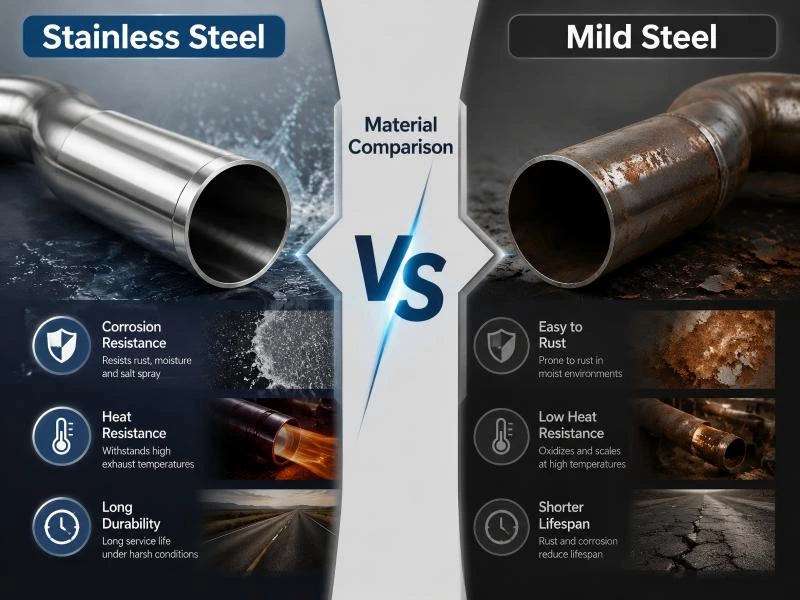
Corrosion Resistance: Stainless Steel Has a Clear Advantage
Exhaust systems are constantly exposed to conditions that can accelerate corrosion, including rain, humidity, road salt, and condensation inside the exhaust pipe. Over time, these factors can weaken the pipe structure and affect exhaust system reliability.
A stainless steel exhaust pipe provides better protection against corrosion, making it suitable for vehicles operating in harsh environments or regions with frequent moisture and salt exposure.
For vehicles expected to operate for many years with reduced maintenance requirements, stainless steel is often a more suitable material choice.
Durability and Temperature Performance
During operation, exhaust pipes experience rapid temperature changes. Cold starts, high-speed driving, and heavy loads can create repeated thermal stress on exhaust components.
Stainless steel maintains good mechanical strength under these conditions and helps reduce problems caused by heat cycling. This is one reason stainless steel is widely used in applications where reliability and long service life are important.
When Mild Steel Exhaust Pipes May Be Suitable
Although stainless steel offers several performance advantages, mild steel can still be suitable for certain applications. For vehicles where initial cost is the main consideration, mild steel exhaust pipes may provide a practical solution.
However, the operating environment should always be considered. Vehicles exposed to frequent moisture, coastal climates, or demanding driving conditions may benefit from the additional corrosion resistance provided by stainless steel.
Which Exhaust Pipe Material Should You Choose?
There is no single material choice that fits every exhaust application. Stainless steel is often preferred when durability, corrosion resistance, and long-term reliability are priorities, while mild steel can be suitable for applications where cost efficiency is more important.
Choose Stainless Steel When:
- Long service life is required
- The vehicle operates in harsh environments
- Corrosion resistance is a priority
- Performance and reliability are important
For automotive exhaust projects requiring durable materials and customized specifications, stainless steel exhaust pipes can be developed according to vehicle requirements, installation conditions, and performance expectations.
Common Stainless Steel Types for Exhaust Pipes
Not all stainless steel exhaust pipes use the same material grade. Different stainless steel types provide different levels of corrosion resistance, heat performance, durability, and cost efficiency. Selecting the appropriate material depends on the vehicle application, operating environment, and expected service life.
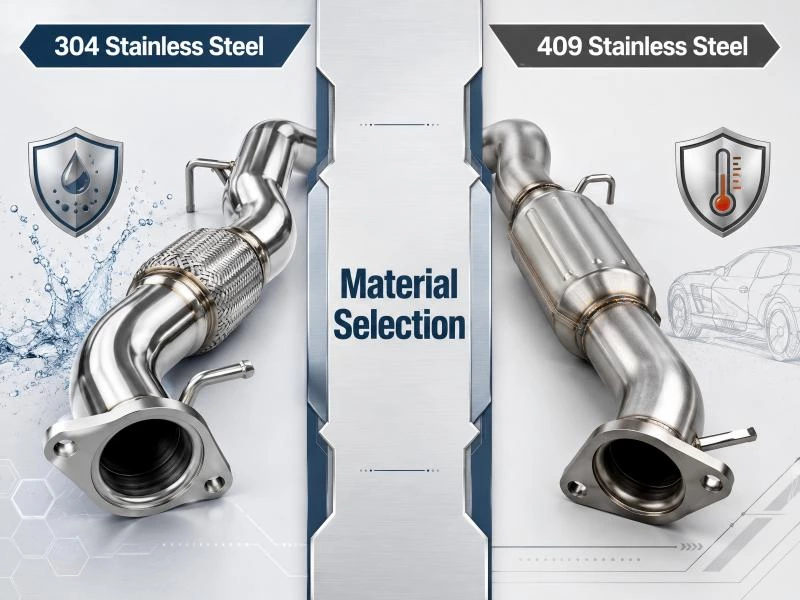
For automotive exhaust applications, 304 stainless steel and 409 stainless steel are two commonly used materials. Each type has different characteristics and is suitable for different exhaust system requirements.
304 Stainless Steel Exhaust Pipe
304 stainless steel is widely recognized for its excellent corrosion resistance and durability. It contains a higher level of chromium and nickel compared with many standard stainless steel grades, which helps provide better protection against rust and environmental exposure.
Because of its combination of strength, appearance, and corrosion resistance, 304 stainless steel exhaust pipes are commonly used in applications where long-term reliability and premium performance are important.
304 Stainless Steel Advantages
- Excellent resistance to corrosion and oxidation
- Strong performance in moisture and harsh environments
- Good durability under repeated temperature changes
- Suitable for premium and performance exhaust applications
409 Stainless Steel Exhaust Pipe
409 stainless steel is another common material used in automotive exhaust systems. It provides good heat resistance and durability while offering a more cost-effective solution compared with higher-grade stainless steel options.
This material is often selected for OEM automotive exhaust applications where reliable heat performance and production efficiency are important considerations.
Although 409 stainless steel may develop surface discoloration over time due to heat exposure, it can still provide reliable structural performance when used in suitable exhaust applications.
304 vs 409 Stainless Steel for Exhaust Applications
| Factor | 304 Stainless Steel | 409 Stainless Steel |
|---|---|---|
| Corrosion Resistance | Higher resistance to rust and environmental exposure | Good resistance for standard automotive applications |
| Heat Performance | Excellent high-temperature stability | Good heat resistance for exhaust environments |
| Appearance | Maintains a cleaner surface appearance | May show surface color changes after heat exposure |
| Cost | Higher material cost | More cost-effective option |
| Typical Applications | Performance vehicles, premium exhaust systems, custom applications | OEM vehicles and cost-sensitive exhaust systems |
How to Select the Right Stainless Steel Material
The best material choice depends on more than the stainless steel grade itself. Vehicle usage, environmental conditions, durability expectations, and project requirements should all be considered during exhaust pipe development.
- Performance applications: Often require materials with excellent durability and corrosion resistance.
- OEM replacement applications: Usually focus on reliable performance, consistency, and cost balance.
- Harsh environments: Benefit from materials with stronger corrosion resistance.
For customized exhaust projects, material selection can be combined with pipe diameter, bending design, and vehicle requirements to develop suitable stainless steel exhaust pipe solutions.
Applications of Stainless Steel Exhaust Pipes
Stainless steel exhaust pipes are used across a wide range of automotive applications where durability, corrosion resistance, and reliable performance are required. Different vehicles have different operating conditions, so exhaust pipe materials and designs need to match specific requirements such as vehicle type, engine output, driving environment, and expected service life.
From passenger cars and performance vehicles to pickup trucks and commercial applications, stainless steel exhaust systems provide a practical solution for applications where long-term reliability and stable exhaust performance are important.
Passenger Vehicles
Passenger vehicles require exhaust systems that can provide reliable operation under daily driving conditions. Since vehicles are frequently exposed to rain, moisture, road debris, and temperature changes, corrosion resistance is an important consideration when selecting exhaust pipe materials.
Stainless steel exhaust pipes are commonly used in passenger vehicle applications because they help maintain durability while providing accurate fitment and stable performance throughout the vehicle's service life.
For different passenger vehicle platforms, AOSU develops vehicle-specific exhaust solutions, including Honda exhaust solutions and other customized exhaust applications based on vehicle requirements.
Performance Vehicles
Performance vehicles often place greater demands on exhaust system design. Higher engine output, increased exhaust temperature, and modified driving conditions require exhaust components that can maintain structural stability while supporting efficient exhaust flow.
Stainless steel exhaust pipes are widely selected for performance applications because they combine heat resistance, durability, and design flexibility. When combined with suitable pipe diameter and exhaust configuration, stainless steel systems can support different performance goals while maintaining reliable operation.
Pickup Trucks and Off-Road Vehicles
Pickup trucks and off-road vehicles often operate in more demanding environments, including mud, water exposure, heavy loads, and long-distance driving. These conditions increase the importance of exhaust components that can resist corrosion and mechanical stress.
Stainless steel exhaust pipes are suitable for applications where long-term durability is required. AOSU provides exhaust solutions for different vehicle platforms, including Isuzu exhaust solutions, Nissan exhaust solutions, and Mitsubishi exhaust solutions.
OEM Exhaust Systems
For OEM automotive applications, exhaust pipes need to meet requirements for consistent dimensions, reliable fitment, production stability, and long-term performance. Material selection is an important part of ensuring that exhaust components can perform consistently across different vehicle batches.
Stainless steel exhaust pipe designs can be developed according to vehicle drawings, samples, specifications, and installation requirements. This allows manufacturers and automotive suppliers to create exhaust solutions that match specific application needs.
Common Stainless Steel Exhaust Pipe Applications
- Passenger cars and SUVs
- Performance and modified vehicles
- Pickup trucks and off-road vehicles
- OEM replacement exhaust systems
- Custom automotive exhaust projects
The ideal stainless steel exhaust pipe solution depends on the vehicle platform, operating environment, material requirements, and exhaust system design. Proper selection helps achieve a balance between durability, fitment, performance, and long-term reliability.
How to Choose the Right Stainless Steel Exhaust Pipe
Choosing the right stainless steel exhaust pipe requires more than selecting a durable material. The pipe design needs to match the vehicle application, exhaust system layout, installation requirements, and expected operating conditions.
A suitable exhaust pipe should provide the right balance between durability, exhaust flow, fitment accuracy, and long-term reliability. For OEM and custom automotive applications, each factor needs to be considered together to ensure the final exhaust system meets the vehicle requirements.
Consider the Vehicle Application
The first step in selecting a stainless steel exhaust pipe is understanding the vehicle application. Different vehicles have different engine configurations, exhaust layouts, operating environments, and performance requirements.
Passenger vehicles, performance cars, pickup trucks, and commercial vehicles may require different exhaust designs. Factors such as driving conditions, engine output, and installation space all influence the most suitable exhaust pipe solution.
Select the Proper Pipe Diameter
Pipe diameter plays an important role in exhaust system performance. A properly sized pipe helps maintain a balance between exhaust gas velocity and flow capacity.
An exhaust pipe that is too small may create unnecessary flow restrictions, while an oversized pipe may reduce exhaust velocity and affect overall system balance. The correct diameter should be selected according to engine specifications, power requirements, and the complete exhaust configuration.
For more details about diameter selection principles, see our guide on how to choose the right exhaust pipe diameter.
Choose the Suitable Stainless Steel Grade
Different stainless steel grades provide different levels of corrosion resistance, heat performance, and cost efficiency. The right material depends on the vehicle environment, durability expectations, and project requirements.
For applications requiring maximum corrosion resistance and long service life, higher-grade stainless steel options may be preferred. For OEM applications where cost balance and reliable performance are important, other stainless steel grades may provide a practical solution.
Evaluate Exhaust Pipe Design and Fitment
Material quality alone cannot guarantee good exhaust performance. The pipe design must also match the vehicle structure, including bending angles, connection points, mounting locations, and available installation space.
Accurate bending and manufacturing consistency help ensure proper installation and reduce problems such as poor alignment, clearance issues, or additional modifications during assembly.
OEM and Custom Stainless Steel Exhaust Pipe Requirements
For OEM and aftermarket projects, standard exhaust pipes may not always meet specific vehicle or production requirements. Customized solutions allow adjustments based on drawings, samples, vehicle models, dimensions, and application conditions.
Key Factors for Custom Exhaust Pipe Selection
- Vehicle model and exhaust system layout
- Required pipe diameter and dimensions
- Stainless steel material specification
- Bending and routing requirements
- OEM or aftermarket application needs
AOSU provides custom exhaust pipe solutions for different automotive applications, supporting material selection, design requirements, and production needs for OEM and aftermarket projects.
Custom Stainless Steel Exhaust Pipe Solutions
Standard exhaust pipes may not always meet the requirements of different vehicle models, engine configurations, or installation environments. For OEM projects, aftermarket applications, and special vehicle requirements, customized stainless steel exhaust pipe solutions provide greater flexibility in design and production.
A customized exhaust pipe is developed according to specific application needs, including vehicle structure, pipe dimensions, routing design, material requirements, and connection specifications. This helps ensure proper fitment, reliable performance, and consistent installation.
Vehicle-Specific Exhaust Pipe Customization
Different vehicles require different exhaust layouts due to variations in chassis design, engine configuration, and available installation space. A customized stainless steel exhaust pipe can be developed based on the actual vehicle requirements rather than relying only on standard dimensions.
Customization may include adjustments to:
- Pipe diameter and overall dimensions
- Bending angles and routing design
- Connection points and mounting positions
- Stainless steel material specifications
OEM Stainless Steel Exhaust Pipe Development
For OEM applications, exhaust pipe suppliers need to provide consistent quality, accurate dimensions, and stable production capability. Stainless steel exhaust pipes can be developed according to technical drawings, samples, or vehicle specifications.
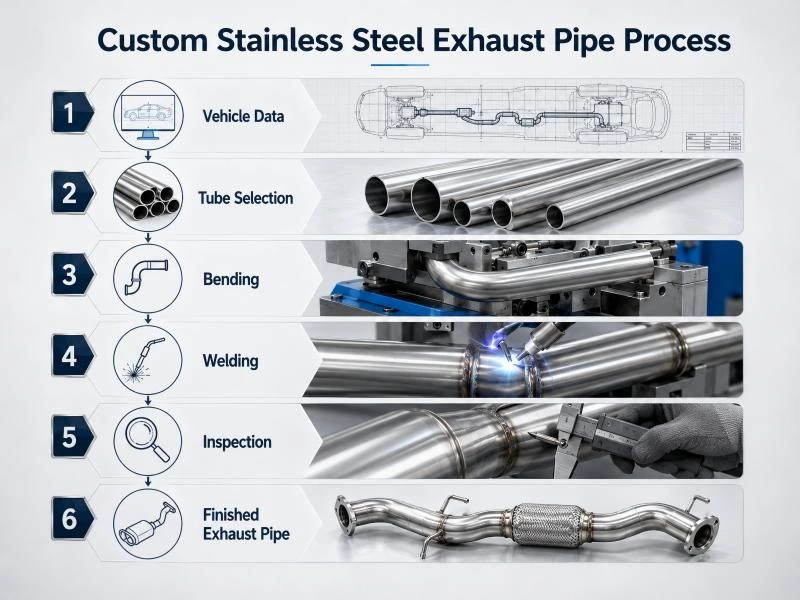
The development process typically involves reviewing application requirements, confirming design details, producing samples, and verifying fitment before mass production.
Custom Exhaust Pipe Development Process
- Requirement analysis and specification confirmation
- Material and design selection
- Prototype development and fitment testing
- Production and quality inspection
Applications for Customized Stainless Steel Exhaust Pipes
Custom stainless steel exhaust pipes are commonly used for different automotive applications, including replacement projects, performance upgrades, vehicle-specific exhaust systems, and OEM supply requirements.
By combining suitable materials, accurate manufacturing, and application-focused design, customized exhaust solutions can achieve the required balance between durability, exhaust flow, installation accuracy, and long-term reliability.
AOSU supports custom exhaust pipe solutions for different automotive applications. For OEM requirements, drawings, samples, or vehicle-specific projects, contact our team to discuss your exhaust pipe requirements.
FAQ About Stainless Steel Exhaust Pipes
Is stainless steel good for exhaust pipes?
Yes. Stainless steel is a popular material for exhaust pipes because it provides good corrosion resistance, heat resistance, and durability. It can withstand the demanding conditions found in automotive exhaust systems, including high temperatures, moisture, and continuous vibration.
What is the best stainless steel for exhaust pipes?
The best stainless steel grade depends on the vehicle application, operating environment, and performance requirements. 304 stainless steel is often selected for applications requiring excellent corrosion resistance and long service life, while 409 stainless steel is commonly used for OEM automotive applications where durability and cost balance are important.
How long does a stainless steel exhaust pipe last?
The service life of a stainless steel exhaust pipe depends on factors such as material grade, driving conditions, environmental exposure, and manufacturing quality. Compared with many standard exhaust materials, stainless steel generally provides better resistance to rust and corrosion, helping extend exhaust system durability.
Are stainless steel exhaust pipes better than mild steel exhaust pipes?
Stainless steel exhaust pipes generally provide better corrosion resistance and longer service life than mild steel options. However, the most suitable material depends on the application. Mild steel can be a practical choice where initial cost is the main consideration, while stainless steel is preferred when durability and reliability are priorities.
Can stainless steel exhaust pipes be customized?
Yes. Stainless steel exhaust pipes can be customized according to vehicle models, drawings, samples, pipe dimensions, routing requirements, and installation specifications. Custom solutions allow manufacturers and suppliers to support different OEM, replacement, and aftermarket exhaust applications.
Do stainless steel exhaust pipes improve vehicle performance?
A stainless steel exhaust pipe itself does not automatically increase vehicle performance. Performance depends on the complete exhaust system design, including pipe diameter, routing, muffler configuration, and engine requirements. The main advantages of stainless steel are durability, corrosion resistance, and reliable long-term performance.
Conclusion
Choosing the right stainless steel exhaust pipe requires consideration of more than just material selection. Factors such as corrosion resistance, heat performance, pipe diameter, vehicle application, exhaust layout, and installation requirements all influence the final exhaust system performance.
Stainless steel exhaust pipes are widely used because they provide a reliable balance between durability, environmental resistance, and long-term service life. Whether for passenger vehicles, performance applications, pickup trucks, or OEM projects, the right exhaust design helps ensure proper fitment and stable operation under different driving conditions.
For specific vehicle requirements, AOSU provides custom exhaust pipe solutions using application-focused designs and suitable materials. From vehicle models and drawings to customized dimensions and production requirements, our team supports different automotive exhaust projects. Contact AOSU for more information about stainless steel exhaust pipe solutions.