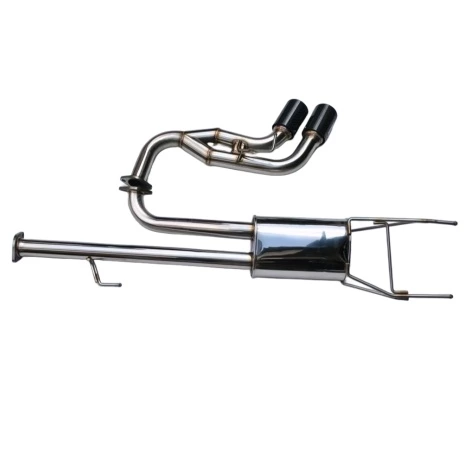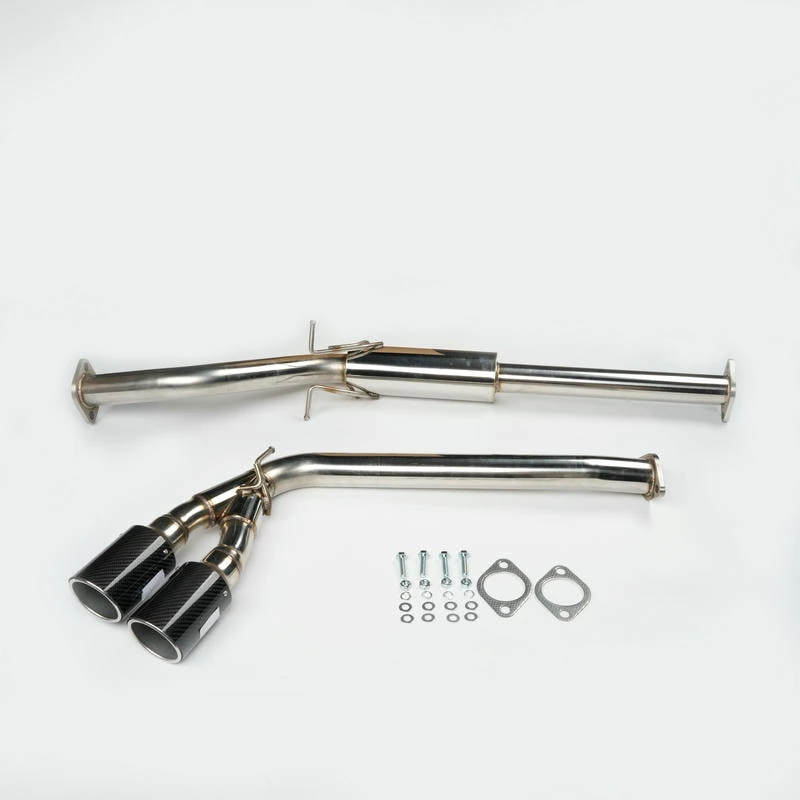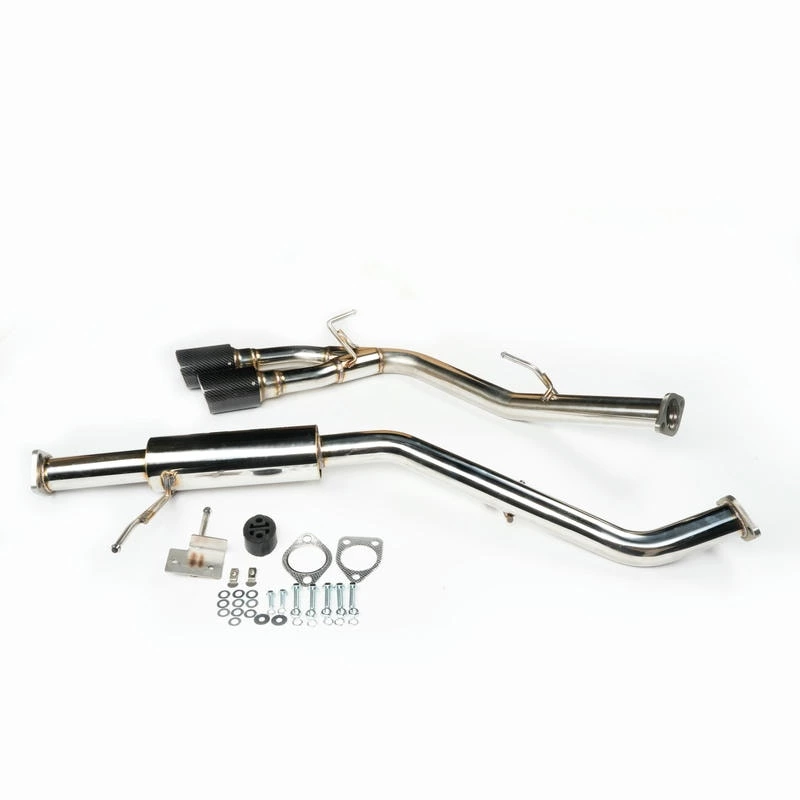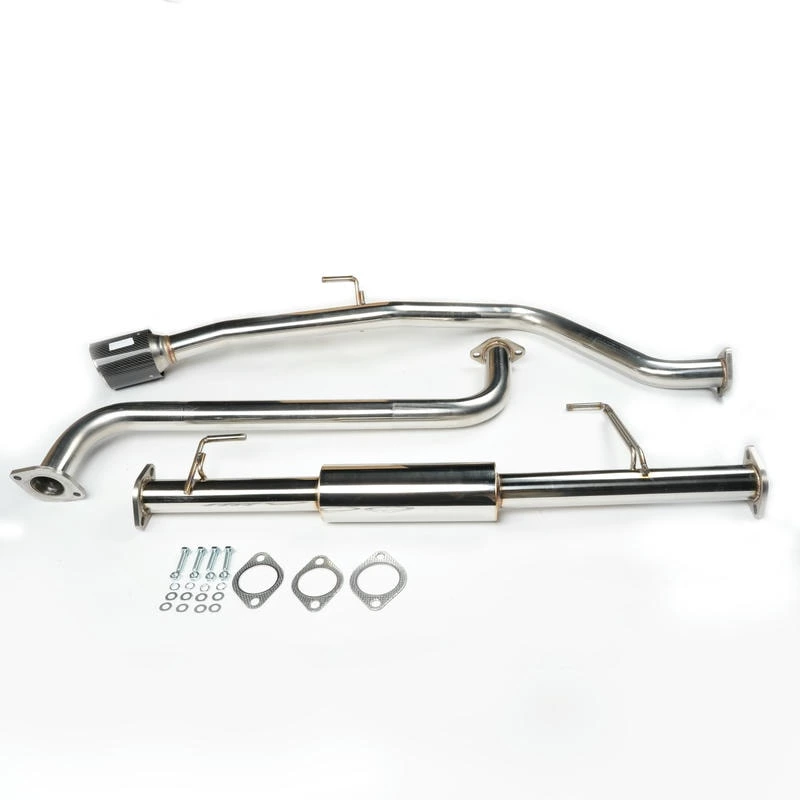
Mitsubishi Pajero Exhaust System Guide: Fitment & Replacement
Finding the correct Mitsubishi Pajero exhaust system is more complicated than matching the word “Pajero” and a production year. Across its long production history, the Pajero has used different diesel and petrol engines, short- and long-wheelbase bodies, manual and automatic transmissions, regional emissions packages, and several exhaust layouts.
The same vehicle family has also been sold under the Montero and Shogun names in some markets. Add the separate Pajero Sport model line, and it becomes easy for a replacement exhaust to be listed for a vehicle that looks correct on paper but uses different flanges, hangers, pipe routing, or emissions hardware underneath.
For that reason, a Pajero exhaust should be identified from the vehicle configuration outward—not selected from pipe diameter or appearance alone.
Quick Answer: Before ordering a Pajero exhaust, confirm the exact Pajero generation or chassis code, engine code, short- or long-wheelbase body, transmission where relevant, target market, DPF configuration, and the physical geometry of the original exhaust.
Pajero, Montero and Shogun: Understand the Name Before Checking Fitment
Mitsubishi has used different names for the Pajero family in different markets. Vehicles sold as Montero or Shogun can belong to the same broader Pajero lineage, but that does not mean an exhaust advertised under one of those names automatically fits every equivalent-looking vehicle in another market.
Regional differences can affect:
- Engine specification
- Emissions equipment
- Catalyst and DPF arrangement
- Sensor positions
- Exhaust connection points
- Muffler configuration
- Noise-control requirements
For replacement sourcing, Pajero, Montero and Shogun should therefore be treated as useful vehicle-family references rather than complete fitment specifications.
Do Not Confuse Pajero with Pajero Sport
One of the most important catalogue distinctions is between the traditional Mitsubishi Pajero and the Mitsubishi Pajero Sport.
They are related in brand positioning, but they are not simply different names for the same vehicle. Their platform, engine applications, chassis packaging and exhaust geometry can differ substantially.
This matters particularly with later diesel applications. A 2.4L 4N15 Pajero Sport exhaust should not automatically be catalogued as compatible with a classic Pajero using the 3.2L 4M41 engine.
Catalogue Rule: “Pajero” and “Pajero Sport” should be verified as separate vehicle applications unless the exact exhaust part has been physically or technically validated for both.
Mitsubishi Pajero Exhaust System Layout
The exact exhaust layout depends on generation, engine and emissions specification, but a turbo-diesel Pajero can be simplified into several functional sections.
Turbocharger → Front / Dump Pipe → Catalyst / DPF Section → Intermediate Pipe → Muffler → Tailpipe
Older vehicles may use a comparatively simple turbo-to-tailpipe arrangement, while later clean-diesel models can incorporate particulate filtration and additional sensors in the front half of the system.
Turbo and Front Pipe
On turbo-diesel Pajeros, the front or dump pipe connects the turbocharger outlet to the downstream exhaust.
This section has limited packaging space and usually contains critical geometry around the engine, transmission and front underbody. Turbo flange orientation, bend rotation and the position of any catalyst or sensor interfaces must therefore match the specific application.
For a general explanation of this exhaust section, see our downpipe guide.
Catalyst and DPF Section
Later diesel Pajero applications can use a diesel particulate filter as part of the exhaust after-treatment system.
The filter captures particulate matter and operates together with sensors and engine-management strategies. A DPF-equipped vehicle therefore cannot be treated as simply an older Pajero with another canister added to the pipe.
The DPF location changes where a replacement exhaust section can begin and which sensors, flanges and pipe geometry need to be retained.
Intermediate and Rear Exhaust
After the front emissions section, the exhaust travels beneath the vehicle toward the muffler and outlet.
This area has to work around the body structure, driveline, suspension and rear underbody while maintaining enough space for movement and thermal expansion.
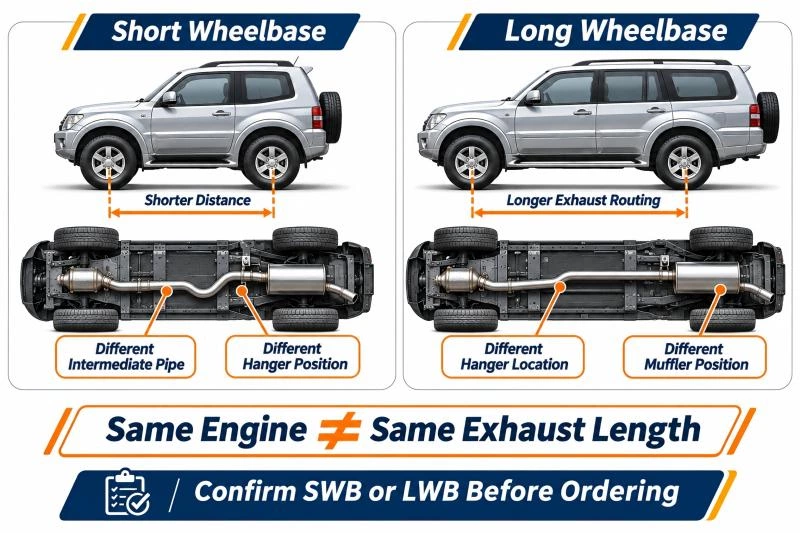
On Pajero applications, wheelbase becomes especially important because a short-wheelbase and long-wheelbase vehicle can require different intermediate pipe lengths and hanger positions even when they use the same engine family.
4M40 vs 4M41: Engine Code Is a Primary Fitment Identifier
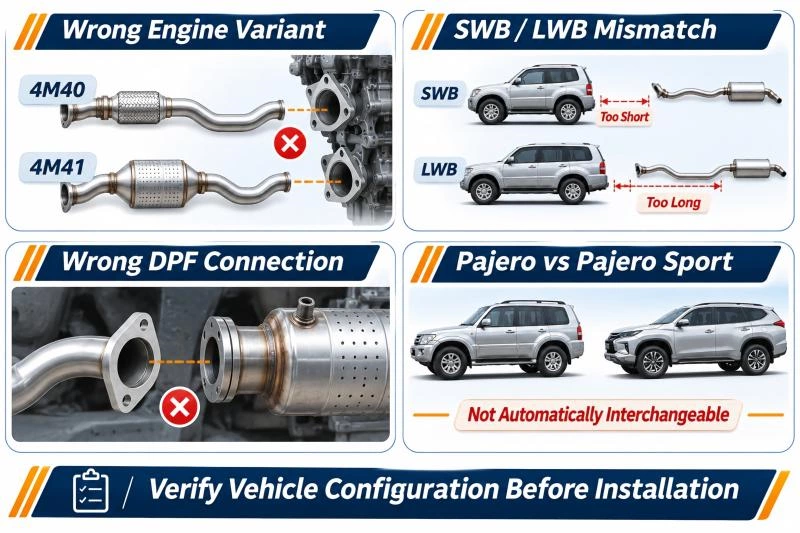
Two of the most relevant diesel engine families when sourcing older Pajero exhaust parts are the 4M40 2.8L and 4M41 3.2L.
| Engine Family | Typical Pajero Application | What Must Be Verified |
|---|---|---|
| 4M40 | Older 2.8L turbo-diesel Pajero applications | Turbo connection, front pipe, wheelbase, transmission, hangers and downstream layout |
| 4M41 | 3.2L DI-D Pajero applications | Generation, emissions equipment, DPF status, SWB/LWB, transmission and flange geometry |
The engine code should not be used alone, however. The 4M41 remained in use across multiple Pajero model revisions, and exhaust systems changed as emissions technology and vehicle specifications evolved.
A listing that says only “Pajero 3.2 diesel exhaust” is therefore not precise enough for reliable B2B sourcing.
Why Pajero Exhaust Fitment Changes Within the Same Engine Family
A useful lesson from Pajero exhaust catalogues is that even vehicles sharing a 3.2L 4M41 engine can require different exhaust systems.
Several variables explain why.
Short Wheelbase vs Long Wheelbase
Pajero has been produced in both short- and long-wheelbase body configurations.
Wheelbase affects the distance between front and rear exhaust reference points. It can change intermediate pipe length, hanger location, muffler position and tailpipe routing.
A pipe designed for a long-wheelbase body should not be assumed to fit a short-wheelbase version simply because both use the same engine.
Manual vs Automatic Transmission
Some Pajero exhaust suppliers separate applications by transmission type, particularly on certain 3.2L diesel variants.
The reason is not that the transmission directly changes exhaust-gas requirements. It is packaging: different transmission housings, mounts, crossmembers or adjacent hardware can change the available routing space.
Transmission type should therefore be checked whenever a supplier or original application specifically distinguishes between manual and automatic versions.
Model Revision and Chassis Code
Pajero applications are frequently identified using model or chassis references such as NP, NS, NT, NW and NX in some markets.
These codes can be far more useful than a broad year description because they help distinguish vehicle revisions that may share similar body styling but use different exhaust components.
However, chassis code still should not replace engine and emissions verification. Use it as one part of the fitment record.
Regional Emissions Specification
Later Pajero diesel systems evolved as emissions requirements became stricter. This can affect catalysts, DPF installation, sensors and front-pipe design.
A vehicle from one market should therefore not be assumed to accept an exhaust designed for a visually similar Pajero from another region.
DPF-Back vs Turbo-Back Pajero Exhaust Systems
The terms DPF-back and turbo-back are commonly used in Pajero exhaust catalogues. They describe the portion of the exhaust being replaced; they do not by themselves indicate that one system is universally better.
| System | Replacement Starts At | DPF Status | Main Fitment Questions |
|---|---|---|---|
| DPF-Back | Downstream of the factory DPF | Factory DPF normally retained | DPF outlet connection, wheelbase, hangers, muffler and rear routing |
| Turbo-Back | Turbocharger outlet | Depends on vehicle specification and system design | Turbo flange, catalyst/DPF arrangement, sensors, front routing and legal requirements |
DPF-Back Systems
A DPF-back exhaust begins after the factory particulate filter. This makes the DPF outlet one of the most important reference points for fitment.
The replacement system still has to match the vehicle's wheelbase, hanger positions and rear chassis layout.
Keeping the original DPF in place should not automatically be interpreted as legal approval for every aftermarket exhaust. Local emissions and noise requirements still apply.
Turbo-Back Systems
A turbo-back system replaces a much larger portion of the exhaust and therefore depends on more vehicle-specific interfaces.
Turbo flange position, sensor locations, catalyst or DPF configuration and the complete three-dimensional routing all become part of the fitment problem.
For a replacement-focused article, there is little value in claiming a universal horsepower or fuel-economy improvement from either configuration. Actual engine response depends on the complete vehicle and calibration, not merely the name of the exhaust section.
How to Identify the Correct Pajero Exhaust Before Ordering
For older vehicles with many global variants, photographs alone are a weak fitment method. Use a structured identification process instead.
Recommended Fitment Sequence:
Pajero / Montero / Shogun → Generation or Chassis Code → Engine Code → SWB / LWB → Transmission → Market → DPF Status → Original Exhaust Geometry
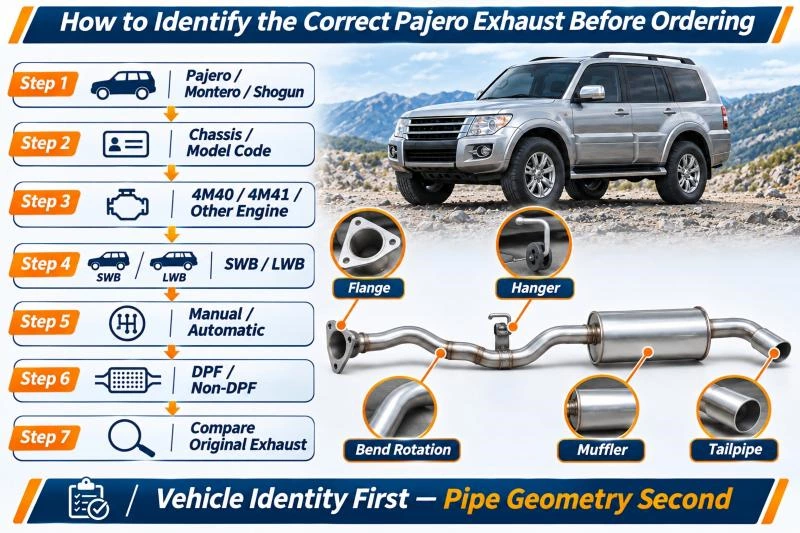
Start with the Vehicle Identification
Record the exact model year, chassis code where available, engine code, transmission and body length.
If the exhaust is being sourced internationally, also record the original sales market because emissions configuration can matter as much as engine size.
Identify Whether the Vehicle Has a DPF
Do not determine DPF status from model year alone.
Emission-system introduction dates differ by market, and vehicles built around transition periods are particularly easy to misidentify.
Confirm the actual hardware, original part information or vehicle documentation.
Use the Original Pipe as a Physical Reference
If the old exhaust is available, compare:
- Turbo or front flange
- Overall pipe length
- Bend direction and rotation
- DPF or catalyst connection
- Hanger number and position
- Muffler location
- Tailpipe route
- Sensor or threaded-port locations
The goal is not to find a pipe that looks similar. It is to confirm that every critical mounting and connection reference matches the vehicle.
Pajero Exhaust Fitment Matrix: What Buyers Should Verify
| Vehicle Detail | Why It Matters | Typical Fitment Risk |
|---|---|---|
| Engine code | Defines turbo/front-side exhaust interfaces | Wrong flange or front-pipe geometry |
| Chassis / model revision | Separates different Pajero vehicle configurations | Incorrect routing or connection location |
| SWB / LWB | Changes distance between exhaust reference points | Wrong intermediate pipe length or hanger position |
| Manual / automatic | Can change transmission-side packaging | Pipe clearance conflict around the transmission or crossmember |
| DPF status | Changes front exhaust and downstream connection | Replacement cannot connect to emissions section |
| Market | Can change emissions hardware and sensors | Incorrect catalyst, DPF or sensor interfaces |
| Original exhaust geometry | Confirms the physical vehicle-specific layout | Hanger, bend or outlet misalignment |
Which Part of a Pajero Exhaust Can Be Replaced?
A damaged Pajero exhaust does not automatically require replacement of the complete system.
The correct replacement scope depends on how the original system is divided and where the failure occurs.
Front or Dump Pipe
This section may be replaced when the pipe, turbo-side flange, flexible connection or adjoining front section has failed, provided the replacement matches the exact engine and downstream emissions configuration.
DPF-Back or Intermediate Section
Where the factory DPF remains functional, downstream pipe sections can sometimes be replaced separately.
The new pipe must match the DPF outlet, wheelbase and hanger geometry rather than simply using the same nominal tube diameter.
Muffler and Rear Section
Rear corrosion, muffler deterioration or impact damage may only require replacement of the rear assembly when the remaining exhaust is still structurally sound.
Rear fitment should include tailpipe position and body clearance, especially on vehicles used off road where previous impacts may already have moved brackets or hangers.
Common Pajero-Specific Fitment Mistakes
Ordering by Engine Size Only
“3.2L Pajero” is not a complete exhaust specification. Chassis revision, wheelbase, transmission and DPF status may still separate several different exhaust applications.
Mixing Short- and Long-Wheelbase Parts
A system can have the correct front connection but still miss rear hangers or muffler locations because the body length is wrong.
Confusing Pajero and Pajero Sport
This is especially risky when online catalogues use broad Mitsubishi model names. Always verify the platform and engine rather than assuming the word “Pajero” proves compatibility.
Assuming Every Later 3.2L Diesel Has the Same DPF Layout
Emissions configurations can vary by production period and destination market. Check the actual vehicle rather than relying on a universal year cut-off.
Copying a Damaged Off-Road Exhaust as a Manufacturing Sample
Pajeros are frequently used on rough terrain. An original pipe may have been hit, bent or pulled by damaged hangers.
If that pipe is used for reverse engineering, the manufacturer should distinguish original geometry from damage before creating production tooling.
Off-Road Use Adds Different Exhaust Inspection Points
A Pajero exhaust used primarily on paved roads and one used regularly off road can develop very different problems.
For off-road vehicles, inspect areas that are vulnerable to direct impact or excessive movement:
- Low points in the intermediate pipe
- Sections close to crossmembers
- Hanger rods and welded hanger joints
- Rear sections near suspension movement
- Heat shields displaced by previous impacts
- Tailpipe position after departure-angle contact
A dent is not automatically a reason to replace the pipe, but deformation that changes routing, creates chassis contact, damages a joint or significantly reduces the tube section deserves closer evaluation.
What About the All-New 2026 Mitsubishi Pajero?
The return of the Pajero name does not make the new vehicle an exhaust-fitment continuation of the previous generation.
The all-new Pajero uses a newer vehicle architecture and a 2.4L clean-diesel turbo engine. Its engine, chassis, emissions system and exhaust routing should therefore be treated as a completely separate application when replacement parts become available.
Do not use previous-generation Pajero, 4M41, Pajero Sport or Triton exhaust fitment data to infer compatibility with the all-new Pajero.
What B2B Buyers Should Send for a Pajero Exhaust Project
For an older vehicle family with many global configurations, complete application data can prevent expensive sample revisions and incorrect production.
| Required Information | Purpose |
|---|---|
| Pajero / Montero / Shogun name | Identifies the sales-market naming |
| Model year and chassis code | Defines vehicle revision |
| Engine code | Defines engine-side exhaust interfaces |
| SWB or LWB | Confirms exhaust length and rear mounting references |
| Manual or automatic | Helps confirm underbody routing where applications differ |
| DPF / non-DPF | Defines emissions-section connections |
| Original part number | Provides an additional catalogue reference |
| Physical sample or drawing | Provides measurable geometry for manufacturing |
| Expected order quantity | Supports tooling and production planning |
OEM Mitsubishi Pajero Exhaust Manufacturing
For replacement-parts distributors and aftermarket brands, a Pajero exhaust should be developed around the exact vehicle application rather than a generic “4x4 exhaust” layout.
Important production references include bend centerlines, tube rotation, flange orientation, DPF connections, hanger coordinates, muffler position and tailpipe geometry.
Fixtures are particularly important once a prototype has been approved. They help maintain flange and hanger locations from one part to the next instead of relying on visual positioning during assembly.
AOSU supports Mitsubishi exhaust pipe applications and OEM exhaust pipe manufacturing based on vehicle data, drawings and physical samples.
For sample-based development, the original pipe can be measured and converted into controlled manufacturing dimensions before tube bending, welding, fixture validation and batch production.
Our guide to custom exhaust pipe development from drawings or samples explains that process in greater detail.
Mitsubishi Pajero Exhaust Fitment Checklist
| Fitment Check | Confirmed |
|---|---|
| Pajero, Montero or Shogun market name confirmed | □ |
| Pajero and Pajero Sport correctly distinguished | □ |
| Model year / chassis code confirmed | □ |
| Engine code confirmed | □ |
| Short or long wheelbase confirmed | □ |
| Transmission checked where fitment differs | □ |
| Target market confirmed | □ |
| DPF / non-DPF configuration confirmed | □ |
| Front flange and downstream connections checked | □ |
| Hanger positions compared with original | □ |
| Pipe routing and rear outlet position checked | □ |
Frequently Asked Questions About Pajero Exhaust Systems
Are Mitsubishi Pajero and Montero exhaust systems the same?
They can belong to the same broader vehicle lineage, but compatibility should not be assumed from the name alone. Engine, chassis revision, body length, transmission, market and emissions configuration still need to match.
Does every 3.2L 4M41 Pajero use the same exhaust?
No. The 4M41 was used across multiple Pajero applications and production periods. SWB/LWB configuration, transmission, chassis revision and DPF status can all affect the exhaust.
Is a Pajero Sport exhaust the same as a Pajero exhaust?
Not automatically. Pajero and Pajero Sport should be treated as separate vehicle applications unless the exhaust manufacturer specifically confirms cross-fitment for the exact engine and chassis.
What is a DPF-back Pajero exhaust?
A DPF-back system replaces the exhaust downstream of the factory diesel particulate filter while retaining the filter itself. Fitment still depends on the DPF outlet connection, body length, hangers and downstream routing.
How can I identify the correct Pajero replacement exhaust?
Use the chassis or model code, engine code, SWB/LWB configuration, transmission where applicable, market, DPF status and original part geometry. A photograph alone is usually not enough for precise fitment.
Can a Pajero exhaust be manufactured from an original sample?
Yes. The sample can be reverse engineered into measurable bend, flange, hanger and connection data. If the vehicle has been used off road, the sample should first be checked for impact deformation before it becomes the production reference.
Conclusion
Mitsubishi Pajero exhaust fitment is a vehicle-identification problem before it is a pipe-selection problem.
The Pajero's long production history, different market names, 4M40 and 4M41 diesel applications, short- and long-wheelbase bodies, transmission differences and changing emissions systems created multiple exhaust configurations that can look similar but are not necessarily interchangeable.
The safest replacement process is to identify the exact vehicle first, confirm whether it is Pajero or Pajero Sport, verify engine and DPF configuration, and then compare the original pipe's physical flanges, bends, hangers and routing.
For distributors and OEM buyers, those same references should become controlled manufacturing dimensions so that an approved prototype can be reproduced consistently in volume production.
For Mitsubishi Pajero exhaust sourcing or custom OEM projects, contact AOSU with the chassis information, engine code, original part number, drawing or physical sample for technical evaluation.