Single vs Dual Exhaust: What’s the Difference & Which Is Better?
When comparing single vs dual exhaust systems, the most obvious difference seems to be the number of exhaust outlets. However, the real difference is the way exhaust gases travel through the system.
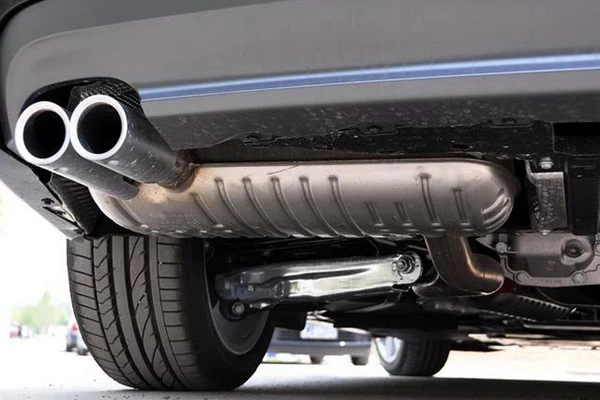
A single exhaust generally uses one main exhaust path, while a true dual exhaust uses two separate paths through a significant portion of the system. Some vehicles also use a dual outlet exhaust, where one main pipe divides into two outlets near the rear.
These layouts can affect exhaust flow, sound, weight, cost, packaging, and vehicle fitment. However, two pipes are not automatically better than one. Pipe diameter, bends, mufflers, merge design, engine output, and the complete exhaust layout all influence performance.
Quick Answer: A single exhaust uses one main exhaust path, while a true dual exhaust uses two. Dual exhaust can provide more total flow area, but a correctly sized single system can offer sufficient flow with lower weight, cost, and routing complexity. Two exhaust tips also do not necessarily mean a vehicle has a true dual exhaust system.
For a broader explanation of the complete exhaust layout, see our automotive exhaust system guide.
What Is a Single Exhaust System?
A single exhaust system uses one primary pipe to carry exhaust gases toward the rear or side of the vehicle. On engines with multiple cylinder banks, the exhaust streams may first merge through a Y-pipe or collector before entering one main pipe.
Simplified single exhaust layout:
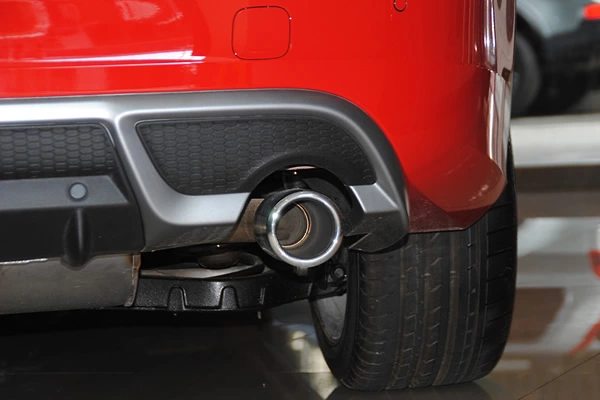
Engine → Exhaust Manifold → Catalyst / DPF → Main Exhaust Pipe → Muffler → Single Outlet
Single exhaust systems are widely used because they require less tubing and underbody space. Fewer pipes, hangers, bends, and connections can reduce system weight, manufacturing cost, and installation complexity.
A single exhaust does not automatically restrict performance. If the pipe diameter, bends, merge points, and muffler are correctly sized, one pipe can provide sufficient flow for many passenger cars, SUVs, pickups, and even higher-output applications.
For more information about selecting pipe size, see our exhaust pipe diameter guide.
What Is a Dual Exhaust System?
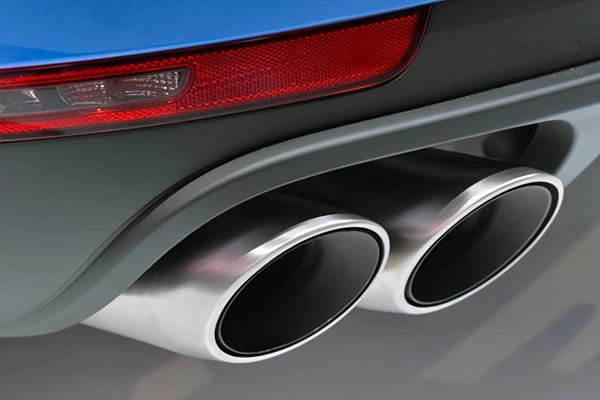
A dual exhaust system uses two exhaust paths or two rear outlets, depending on the design. This distinction is important because two visible exhaust tips do not always indicate a true dual exhaust system.
The two most common layouts are:
- True dual exhaust: two separate exhaust paths run through much of the system.
- Dual outlet exhaust: one main exhaust pipe divides into two pipes or tips near the rear.
A true dual system can provide more combined pipe area, which may be useful when an engine produces a larger volume of exhaust gas. However, it also requires more tubing, space, hangers, and manufacturing work.
True Dual Exhaust vs Dual Outlet Exhaust
One of the most common misunderstandings is assuming that two exhaust tips always mean true dual exhaust.
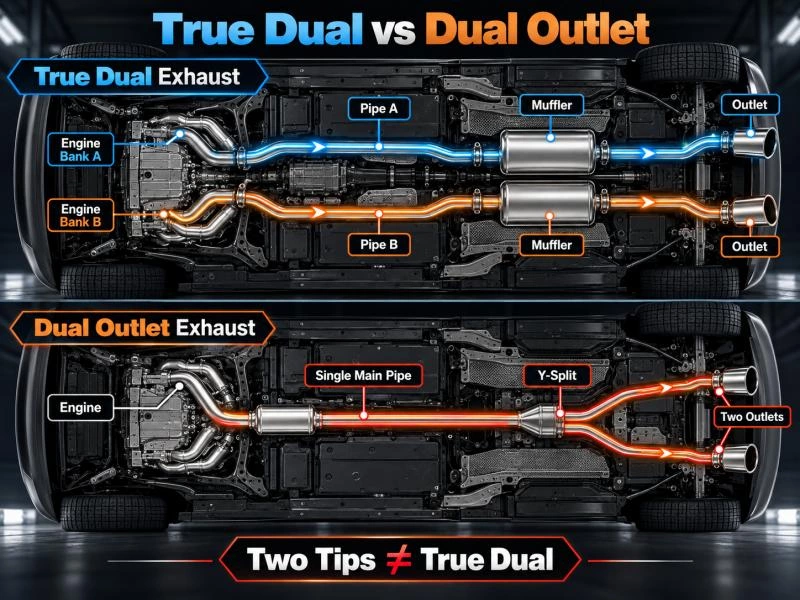
True Dual Exhaust
A true dual system keeps two exhaust streams separate through much of the exhaust layout. It is commonly associated with engines that have two cylinder banks, such as certain V6 and V8 engines.
Engine Bank A → Exhaust Pipe A → Muffler A → Outlet A
Engine Bank B → Exhaust Pipe B → Muffler B → Outlet B
Some true dual systems also use an X-pipe or H-pipe crossover between the two sides.
Dual Outlet Exhaust
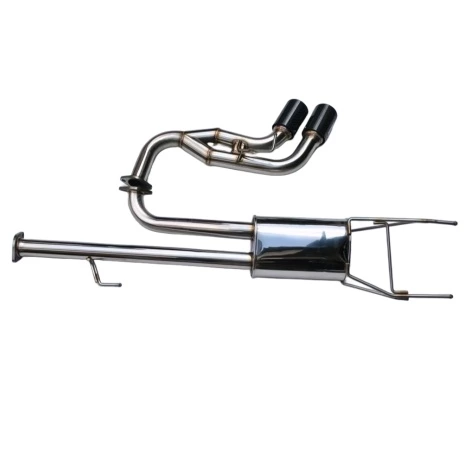
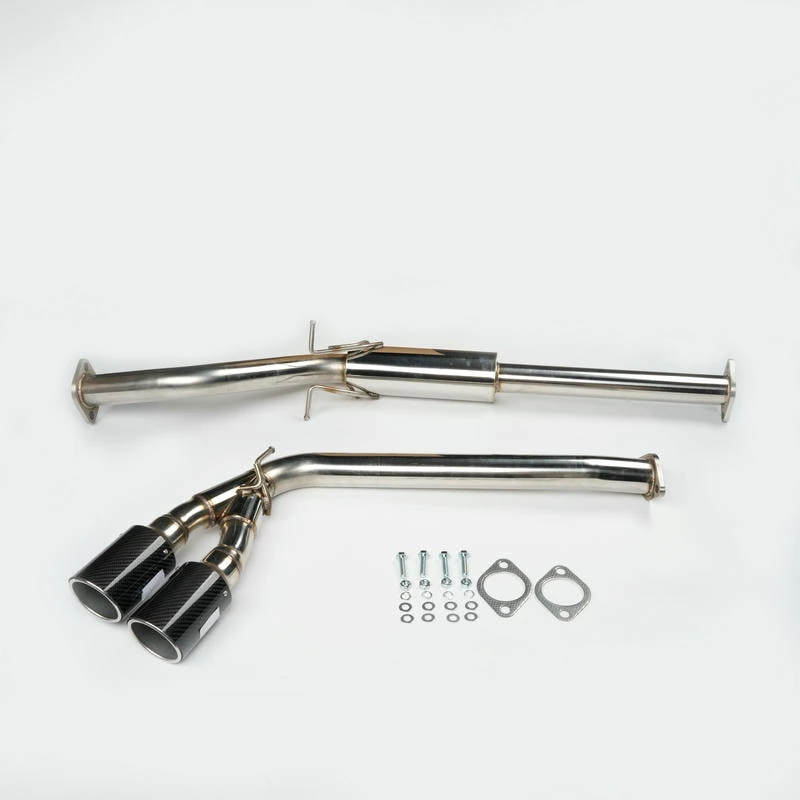
A dual outlet exhaust uses one main pipe for most of the system and divides into two outlets toward the rear.
Engine → Single Main Pipe → Y-Split → Left Outlet + Right Outlet
This design provides two visible exits without requiring two complete exhaust paths. It can be especially practical on SUVs and pickup trucks where chassis space, spare tire position, suspension, and bumper design affect rear exhaust routing.
Key Point: Two exhaust tips do not automatically mean true dual exhaust. Follow the pipe layout underneath the vehicle to identify the actual system.
Single vs Dual Exhaust: Quick Comparison
| Feature | Single Exhaust | Dual Exhaust |
|---|---|---|
| Main Exhaust Path | Usually one | Two in a true dual system |
| Flow Capacity | Depends on pipe diameter | Can provide greater combined area |
| Weight | Usually lower | Usually higher |
| Underbody Space | Requires less | Requires more |
| Routing Complexity | Lower | Higher |
| Cost | Generally lower | Generally higher |
| Sound | Depends on system design | Can have a different exhaust character |
| Best Use | Many standard and space-limited layouts | Applications requiring more flow area or dual-path routing |
Single vs Dual Exhaust Performance
The number of exhaust pipes alone does not determine engine performance. A well-designed single exhaust can provide excellent flow, while a poorly designed dual system can still contain restrictive bends, mufflers, or connections.
A dual exhaust may support more power when the original single system becomes a significant restriction. This is more likely on larger-displacement or higher-output engines that move greater volumes of exhaust gas.
However, replacing one pipe with two does not automatically increase horsepower. Results depend on:
- Engine displacement and output
- Turbocharged or naturally aspirated configuration
- Pipe diameter
- Manifold and downpipe restriction
- Catalytic converter or DPF design
- Y-pipe, X-pipe, or H-pipe geometry
- Bend radius
- Muffler and resonator restriction
Performance depends on the complete exhaust design—not simply one pipe versus two.
One Large Pipe vs Two Smaller Pipes
A more useful way to compare single and dual exhaust systems is to consider total pipe cross-sectional area rather than simply counting the number of pipes.
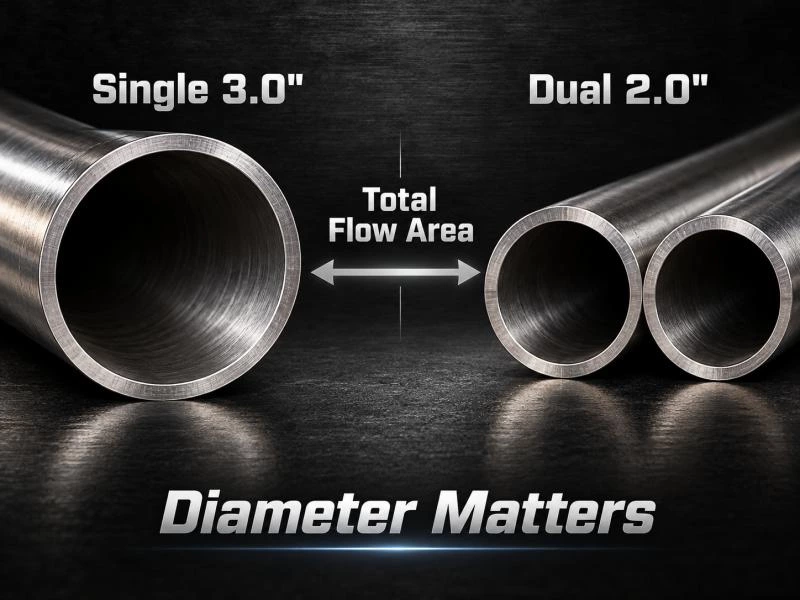
| Configuration | Approx. Total Pipe Area |
|---|---|
| Single 2.5" | 4.91 in² |
| Dual 2.0" | 6.28 in² |
| Single 3.0" | 7.07 in² |
| Dual 2.25" | 7.95 in² |
| Single 3.5" | 9.62 in² |
These figures show why two pipes do not automatically provide twice the usable flow of one pipe. Diameter has a major effect on total area, while actual exhaust flow is also influenced by bends, pipe length, merge design, catalysts, mufflers, and other restrictions.
A well-designed single system with a smooth Y-merge can therefore perform better than a dual system with restrictive bends or undersized mufflers.
H-Pipe vs X-Pipe in a Dual Exhaust
True dual systems may use a crossover between the left and right exhaust paths.
- H-pipe: uses a short connecting tube between two parallel pipes and can help balance pressure between both sides.
- X-pipe: brings both exhaust paths together through a crossover section and can influence pulse interaction, flow, and sound.
The better design depends on the engine, available space, sound target, and overall exhaust layout.
Which Sounds Better: Single or Dual Exhaust?
Neither layout is automatically louder or better sounding. Exhaust tone depends heavily on the engine, pipe diameter, muffler, resonator, crossover, pipe length, and outlet position.
A dual exhaust is often associated with a fuller or more complex sound, especially on engines with two cylinder banks. However, a correctly designed single exhaust can also produce a strong and deep exhaust note.
| Sound Factor | Single Exhaust | Dual Exhaust |
|---|---|---|
| Typical Character | Combined, focused tone | Can sound fuller or more complex |
| Crossover | Usually Y-pipe or merge | May use X-pipe or H-pipe |
| Muffler Influence | High | High |
| Volume | Depends on design | Not automatically louder |
A straight pipe exhaust, for example, can be much louder than either a conventional single or dual system equipped with suitable resonators and mufflers.
The section being replaced also affects sound. See our cat-back vs axle-back exhaust guide for more information.
Single vs Dual Exhaust: Cost and Weight
Single exhaust systems are generally lighter and less expensive because they require less tubing and fewer supporting components.
A true dual exhaust may require two longer pipes, more bends, additional hangers, multiple mufflers, crossover sections, and more welding or connection points.
| Factor | Single Exhaust | Dual Exhaust |
|---|---|---|
| Tubing | Less | More |
| Weight | Usually lower | Usually higher |
| Hangers / Connections | Fewer | More |
| Manufacturing Complexity | Lower | Higher |
| Typical Cost | Lower | Higher |
Material also affects price and durability. See our stainless steel exhaust pipe guide for more information about common exhaust materials.
Installation and Vehicle Fitment
A single exhaust normally requires less underbody space, while a true dual system needs enough room to route two pipes safely around the vehicle.
Important fitment areas include:
- Fuel tank
- Rear axle and suspension
- Driveshaft
- Spare tire
- Heat shields
- Rear bumper outlets
- Hanger positions
For this reason, a vehicle originally designed for one exhaust path cannot always be converted to true dual exhaust simply by adding a second pipe.
Can You Convert Single Exhaust to Dual Exhaust?
In some vehicles, yes. A proper conversion may require new exhaust tubing, a Y-pipe or revised front routing, additional hangers, mufflers, and different rear outlet positions.
Pipe diameter must also be selected correctly. Two oversized pipes can increase weight and packaging difficulty without providing a meaningful flow advantage.
If multiple exhaust sections need to be connected, see our guide to joining exhaust pipes.
Single vs Dual Exhaust for Trucks and SUVs
Trucks and SUVs often have additional packaging constraints because of longer wheelbases, rear suspension travel, spare tires, fuel tanks, and higher ground-clearance requirements.
A single main pipe can simplify underbody routing, while a dual outlet system can provide two rear or side exits without requiring two complete exhaust paths.
This is why the correct configuration should be selected according to the actual chassis rather than appearance alone. AOSU supports vehicle-specific exhaust applications for platforms including Toyota and Ford.
Does Dual Exhaust Improve Fuel Economy?
Not automatically. Fuel economy depends primarily on engine efficiency, vehicle weight, driving conditions, calibration, and overall exhaust restriction.
Replacing a restrictive exhaust with a better-designed system may improve engine breathing in certain situations, but the result cannot be attributed simply to using two pipes. A heavier or oversized dual system may provide little benefit if the engine does not require the additional flow capacity.
Single vs Dual Exhaust: Pros and Cons
| System | Pros | Cons |
|---|---|---|
| Single Exhaust | Lower weight, simpler routing, lower cost, easier packaging | May require a larger pipe for high-flow applications, fewer dual-side outlet options |
| Dual Exhaust | Greater potential total flow area, more outlet options, suitable for some high-output applications | Higher weight, cost, routing complexity, and space requirements |
Which Is Better: Single or Dual Exhaust?
There is no universally better configuration. The correct choice depends on the engine, flow requirements, available chassis space, sound target, weight, budget, and intended application.
| Your Priority | Better Starting Point |
|---|---|
| Lower weight and cost | Single Exhaust |
| Simple routing | Single Exhaust |
| Limited chassis space | Single Exhaust |
| Higher exhaust-flow demand | Properly sized Dual or Larger Single Exhaust |
| Two independent engine-bank paths | True Dual Exhaust |
| Two rear outlets mainly for appearance | Dual Outlet Exhaust |
The best exhaust system is the one correctly sized and routed for the vehicle—not simply the one with more pipes.
OEM and Custom Single & Dual Exhaust Systems
For OEM buyers, distributors, and custom projects, exhaust configuration should be selected according to the actual vehicle rather than using a universal design.
Important specifications include:
- Vehicle make, model, year, and engine
- Single, true dual, or dual outlet configuration
- Pipe diameter and wall thickness
- Catalyst or DPF position
- Muffler and resonator layout
- Wheelbase and chassis dimensions
- Hanger and flange positions
- Rear outlet position
- Material requirements
AOSU provides OEM and custom exhaust pipe solutions for vehicle-specific applications. Custom systems can be developed from drawings, physical samples, vehicle specifications, and project requirements.
If dimensions need to be confirmed before production, see our exhaust pipe measurement guide.
FAQ About Single vs Dual Exhaust
Is dual exhaust better than single exhaust?
Not always. Dual exhaust can provide more total flow area, but a correctly sized single system may be lighter, cheaper, easier to route, and fully capable of supporting the required exhaust flow.
Does dual exhaust increase horsepower?
It can help when the original exhaust is restrictive, but changing from one pipe to two does not guarantee more horsepower. Pipe diameter, bends, catalysts, mufflers, and engine output all affect the result.
Is dual exhaust louder than single exhaust?
Not necessarily. Sound depends heavily on the engine, muffler, resonator, pipe diameter, crossover design, and outlet position.
What is true dual exhaust?
True dual exhaust uses two separate exhaust paths through a significant portion of the system rather than one main pipe that divides near the rear.
Are two exhaust tips the same as dual exhaust?
No. Two exhaust tips can be connected to one main exhaust pipe. The pipe layout underneath the vehicle determines whether the system is truly dual.
Can a 4-cylinder car have dual exhaust?
Yes. A four-cylinder vehicle can use two rear outlets or a divided exhaust layout, although two outlets do not necessarily mean two independent exhaust paths are required.
Can you convert single exhaust to dual exhaust?
In some vehicles, yes. However, the conversion may require new tubing, hangers, mufflers, outlet openings, and additional chassis clearance. Pipe sizing should also be matched to the engine.
Conclusion
The difference between single and dual exhaust systems involves more than the number of visible exhaust tips.
A single exhaust offers simpler routing, lower weight, lower cost, and sufficient flow for many applications. A true dual system can provide greater total flow area when the engine requires it, while a dual outlet system can provide two rear exits without using two complete exhaust paths.
When comparing single vs dual exhaust, pipe diameter, bends, merge or crossover design, mufflers, engine output, chassis space, and intended use matter more than pipe count alone.
For OEM or vehicle-specific projects, AOSU provides custom exhaust pipe solutions with single, dual outlet, and application-specific exhaust configurations.
If you need a custom exhaust system, contact AOSU with your vehicle details, drawings, sample, material requirements, and expected order quantity.